Hanoi rewards travellers who leave the familiar loop of Hoan Kiem Lake, the Old Quarter, and the biggest postcard stops. Some of the city’s most memorable discoveries sit farther out: an ancient citadel surrounded by village lanes, craft communities where work still happens in front of you, and museums that explain Vietnam with more depth than a quick photo stop. This guide to Hanoi hidden gems is designed for a slower day, with practical ways to combine places without pretending they are all next door.
What makes a Hanoi hidden gem worth your time?
A hidden gem in Hanoi does not have to be secret or completely empty. The better test is whether a place reveals a layer of the city that a standard first-day itinerary misses. Look for living heritage, a strong sense of place, and enough substance to reward an hour or more. That might mean walking beside the earthworks of Co Loa, seeing silk handled as a real trade rather than a souvenir label, or spending time with the architecture and objects inside a museum.
These places also work best when you accept a little friction. A village may have uneven lanes, a heritage site may involve outdoor walking, and a museum visit is more enjoyable when you slow down instead of racing through every room. For a broader approach to moving through the city, see How to Experience Hanoi Like a Local in One Day. Then use the suggestions below as building blocks rather than a rigid checklist.
1. Co Loa Citadel for Hanoi’s earliest layers
Co Loa is one of the best Hanoi hidden gems for travellers who want history in a landscape rather than only behind glass. The site is associated with the ancient capital of Âu Lạc and is known for its unusual ringed defensive earthworks. Today, the area feels much more rural than central Hanoi, with narrow roads, homes, trees, ponds, and village life woven around the historic remains.
The appeal is the contrast. You are still within Hanoi’s wider urban region, yet the experience is not a polished downtown attraction. Walk slowly, notice how the relics sit among ordinary life, and leave room for the stories connected with An Dương Vương and Princess Mỵ Châu. The official Imperial Citadel of Thang Long website maintains a dedicated Co Loa section, including historical material and heritage information, so read it before you go rather than relying on a rushed guidebook summary.
How to plan the visit
Give Co Loa a half day if you want to explore without hurrying. Transport time depends heavily on traffic and your starting point, so check a live map on the morning of your visit. Wear shoes suitable for walking and carry water. This is an outdoor heritage experience, not a single building where every sight is concentrated at one entrance. If you want a second history stop on another day, the Local Neighborhoods category is useful for finding stories that place Hanoi’s landmarks in their surrounding communities.
2. Van Phuc Silk Village for a living craft tradition
Van Phuc, in Hanoi’s Hà Đông area, is a better choice than a generic souvenir shop when you want to understand silk as a local craft. The village is associated with silk weaving, and its streets combine textile businesses, displays, family-run shops, and the everyday movement of a working community. You may see finished fabrics arranged for shoppers, but the more interesting experience is paying attention to the process, materials, patterns, and the difference between a workshop atmosphere and a tourist-only retail space.
Do not arrive expecting one neatly packaged attraction. Treat Van Phuc as a neighbourhood visit. Browse without pressure, ask polite questions before photographing people or equipment, and compare the feel of several shops rather than buying the first scarf you see. If you are interested in how shopping fits into daily life, continue with A Local’s Approach to Markets and Small Shops in Hanoi.
What to look for
- How fabric texture, weight, and finish differ from one item to another.
- Whether a shop can explain where and how a product was made.
- The relationship between craft production, family businesses, and the village streets around them.
- Packaging and care instructions, especially if you are buying a delicate textile.
Because individual businesses change their hours and displays, verify details locally before setting out. The value of Van Phuc is not a guaranteed show at a fixed time; it is the chance to see a craft district as a place where commerce and local life overlap.
3. Bat Trang for ceramics beyond the showroom
Bat Trang Ceramic Village is a classic day-trip idea, but it still belongs on a hidden-gems itinerary when approached as a working craft community rather than a quick shopping stop. The village is known for pottery and ceramics, with workshops, stores, displays, and lanes that make the making-and-selling relationship visible. A visitor can look at finished bowls and vases, but the richer question is how clay becomes a useful or decorative object.
Plan time for comparison. Visit more than one shop, notice differences in glazing and form, and ask whether a piece is handmade, mould-produced, or finished locally. If a workshop offers a hands-on activity, check the terms and current availability before assuming it is running. Avoid treating artisans as scenery: ask before taking close-up photographs, and remember that a small purchase from a genuine workshop can be more meaningful than a hurried bargain hunt.
Making the village work as a day
Combine Bat Trang with a relaxed meal or a walk through nearby streets rather than trying to stack it with half a dozen central attractions. Road conditions and traffic can change, so leave flexibility in your return time. Travellers who enjoy the creative side of Hanoi can also browse Art & Creative Spaces for a contrasting look at contemporary studios, galleries, and cultural projects in the city.
4. The Vietnam Museum of Ethnology for context and space
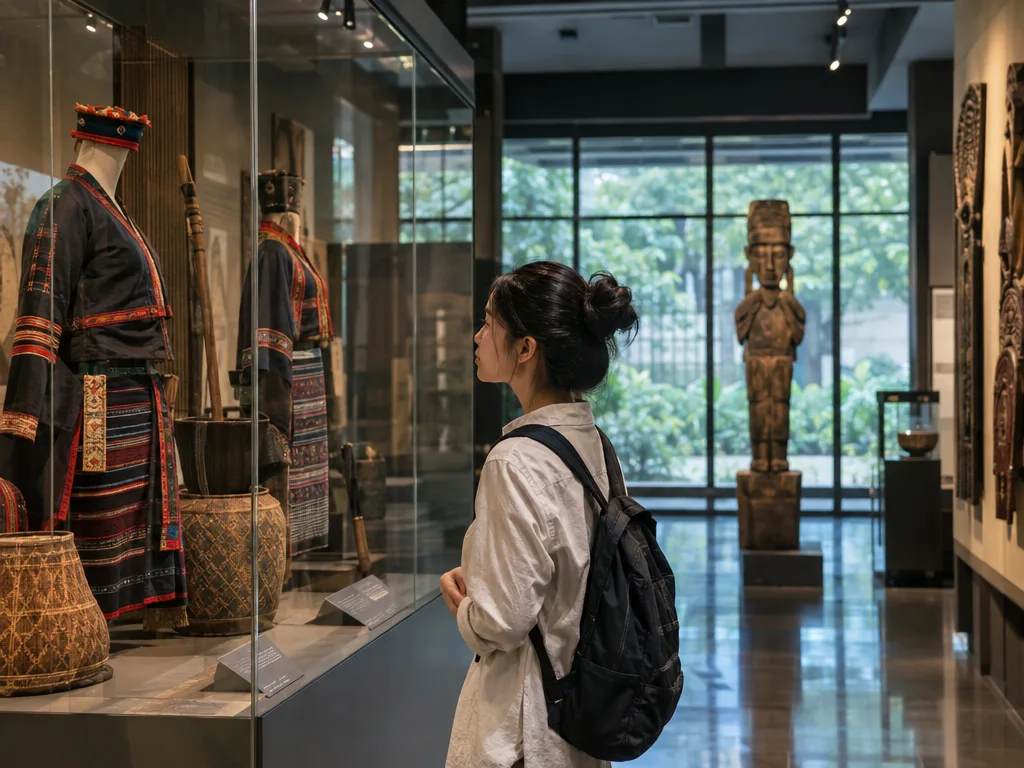
The Vietnam Museum of Ethnology is not unknown, but many visitors still overlook it because it sits outside the Old Quarter sightseeing circuit. It is one of the most useful places in Hanoi for understanding the country’s ethnic diversity through objects, architecture, interpretation, and cultural activities. The museum’s official website says it presents Vietnam’s 54 ethnic groups and includes permanent, temporary, and virtual exhibitions.
It is also practical for a hot, rainy, or overloaded travel day. The official visitor information currently lists opening hours of 8:30 to 17:30 every day except Mondays and the New Year holiday, a ticket price of 40,000 VND per person, and an address on Nguyen Van Huyen Street in Nghia Do. Check the museum’s own site again before visiting because schedules, exhibitions, and fees can change.
How to visit thoughtfully
Allow enough time for both the indoor displays and the outdoor architecture areas. Read the labels instead of reducing the visit to costume photographs, and notice how homes, tools, clothing, belief, work, and community are connected. The museum is especially good for travellers who want a cultural foundation before visiting craft villages, because it encourages you to see regional traditions as diverse and living rather than as a single idea of “Vietnamese culture.”
5. The Vietnam National Museum of History for a focused museum hour
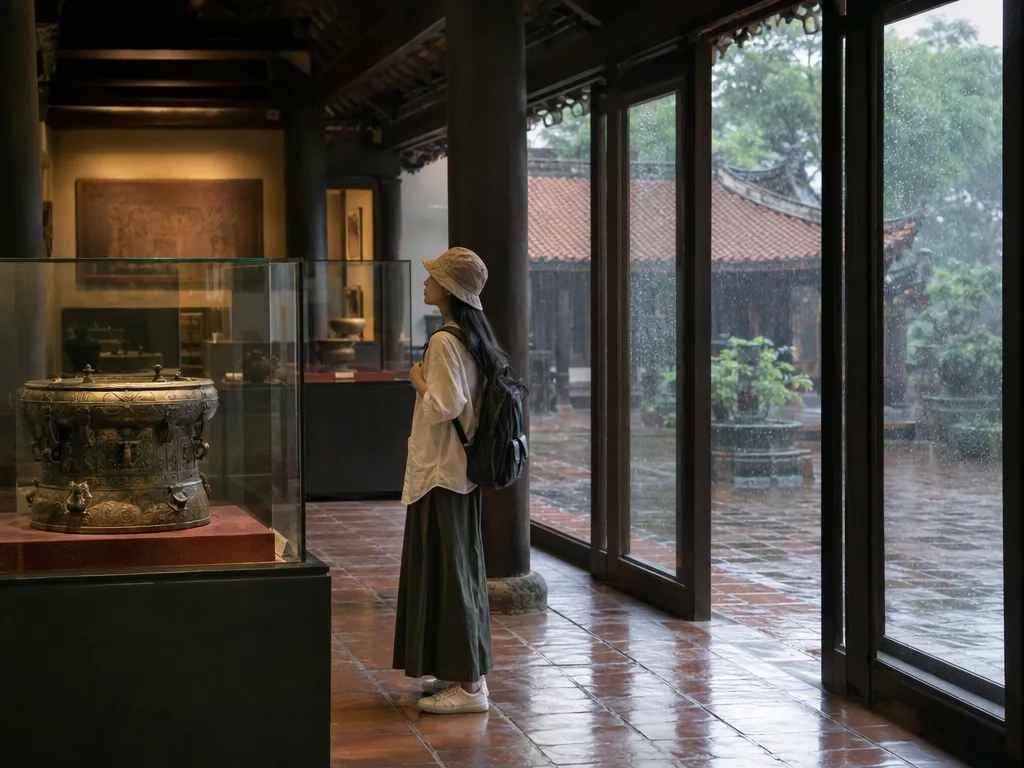
If you want a central hidden gem, choose the Vietnam National Museum of History. It is easier to reach than the outlying villages but often receives less attention than Hanoi’s headline monuments. The museum provides a chronological and archaeological way to understand Vietnam, making it a strong companion to wandering through older streets or visiting royal and colonial-era sites.
The official museum website currently lists morning hours from 8:00 to 12:00 and afternoon hours from 13:30 to 17:00, with the museum open every day except Monday. It lists locations at No. 1 Trang Tien and No. 216 Tran Quang Khai in Hoan Kiem. Confirm the details before travelling, especially if you plan to visit a particular exhibition or both locations. The site also provides information about permanent exhibitions and national treasures, which helps you choose a manageable focus.
Build a better museum visit
Do not try to remember every date. Pick one thread: early archaeology, royal power, religious objects, or the material history of daily life. Then connect that thread to the city outside. A museum becomes more memorable when you leave with a question to notice on your next walk. For a route that balances major sights with ordinary streets, read A Walk Through Hanoi That Balances Landmarks and Local Life.
6. Thang Long Imperial Citadel at a quieter pace
The Imperial Citadel of Thang Long is a major heritage site, yet it can feel like a hidden gem when you visit for its layers rather than a single photo. The official site describes the central sector as a place with historical longevity, a continuous role as a seat of power, and multiple cultural layers. That makes it a valuable stop for travellers who want Hanoi history to feel connected rather than fragmented.
Current visitor information on the official site lists the site at 19C Hoang Dieu, Ba Dinh, with opening hours of 8:00 to 17:00 on all days of the week. It also lists sightseeing and night-tour contact numbers, but availability and booking conditions should be checked directly before planning around a special programme. Explore the gates, courtyards, archaeological evidence, and surviving structures at a pace that leaves room for orientation.
For an unusual angle, look at the site’s official online exhibitions before or after your visit. They can help you recognise details that are easy to miss on the ground. The citadel also works well as a bridge between heritage and creative Hanoi: after visiting, you can use the site’s Hanoi Walking Routes category to choose a neighbourhood walk rather than jumping straight into another major attraction.
How to combine these Hanoi hidden gems
For a craft-focused day, choose Van Phuc or Bat Trang, not both unless you are comfortable spending much of the day outside the centre. For a history-focused day, combine the Vietnam National Museum of History with the Imperial Citadel, allowing time for a meal and an unplanned walk between structured visits. Co Loa deserves its own half day because its atmosphere comes from moving through a wider landscape rather than ticking off one building.
The Museum of Ethnology is flexible enough to stand alone or anchor a northern Hanoi outing. In every case, check official opening information, traffic, weather, and current local arrangements shortly before you leave. These are not attractions to squeeze into a careless race across the city. Their value is the slower transition between exhibits, workshops, lanes, and conversations.
Practical etiquette for lesser-known places
- Ask before photographing people, homes, workshops, religious spaces, or active work.
- Buy thoughtfully rather than bargaining aggressively over a small handmade item.
- Dress comfortably and respectfully for heritage, museum, and village settings.
- Keep noise low when a place is also a community, school, or working neighbourhood.
- Use official websites for current hours, fees, exhibitions, and booking information.
A little preparation protects the experience for both visitors and residents. It also makes the day less stressful: you know which stops are fixed, which are flexible, and where you can simply slow down.
Final thoughts
The best Hanoi hidden gems are not necessarily places nobody has heard of. They are places where you can see more than a landmark’s surface: a village still shaped by making, a museum that gives context to the streets, or a citadel whose history survives inside an ordinary landscape. Choose two or three stops, leave generous travel time, and let the city’s quieter details do the work. That is how a day in Hanoi becomes less like collecting attractions and more like getting to know the place.
JOIN THE CONVERSATION
Comments (0)
No comments yet. Be the first to share a thought.