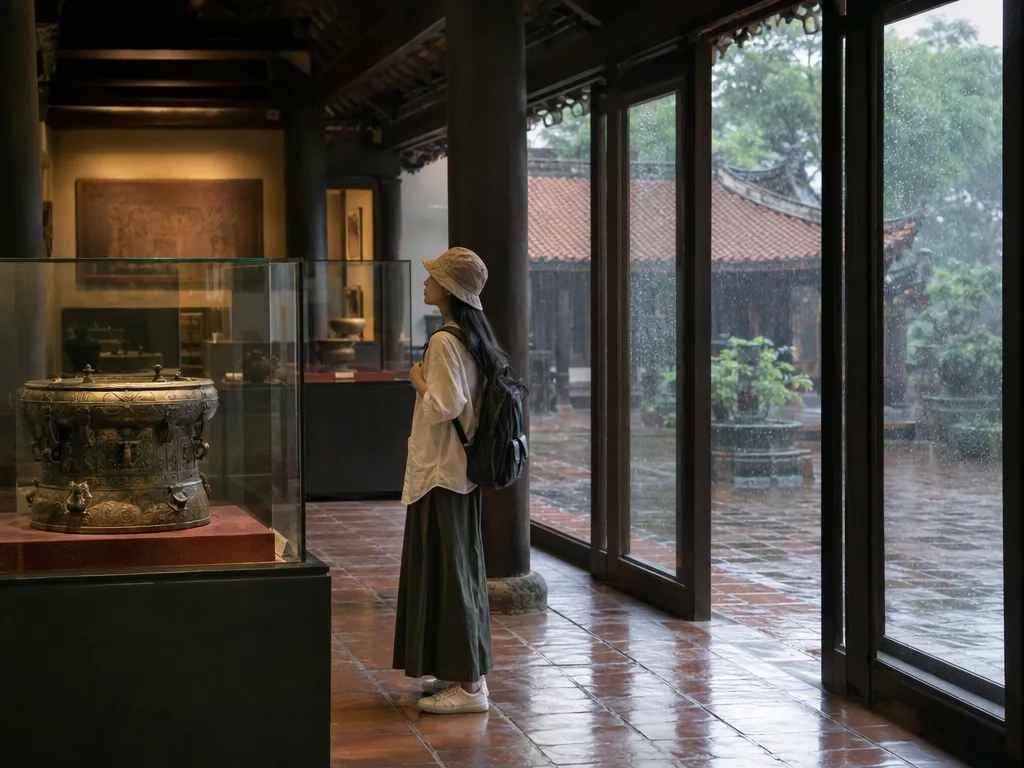
Rain can make Hanoi feel more intimate rather than less interesting. When streets shine, motorbikes slow down, and outdoor plans become uncertain, the city’s museums, heritage interiors, small creative rooms, and covered food stops offer a different way to explore. This guide focuses on hidden gems in Hanoi for rainy days: places and route ideas that reward curiosity without requiring a rigid sightseeing checklist.
Why rainy days reveal a quieter Hanoi
A wet-weather itinerary works best when it is built around one meaningful indoor anchor instead of a long list of distant stops. Hanoi is a city of short transitions, but rain, slippery pavements, and traffic make unnecessary crossing tiring. Choose one museum or cultural space, add a nearby meal or café, and leave room for the weather to change.
Rain also changes what you notice. Courtyards look greener, old façades reflect in puddles, and small entrances become easier to appreciate when you are not rushing between landmarks. The aim is not to find a secret place that nobody else knows. It is to choose a less obvious experience and give it enough time to become memorable.
Start with a museum that gives the day a purpose
Vietnam Museum of Ethnology for culture and context
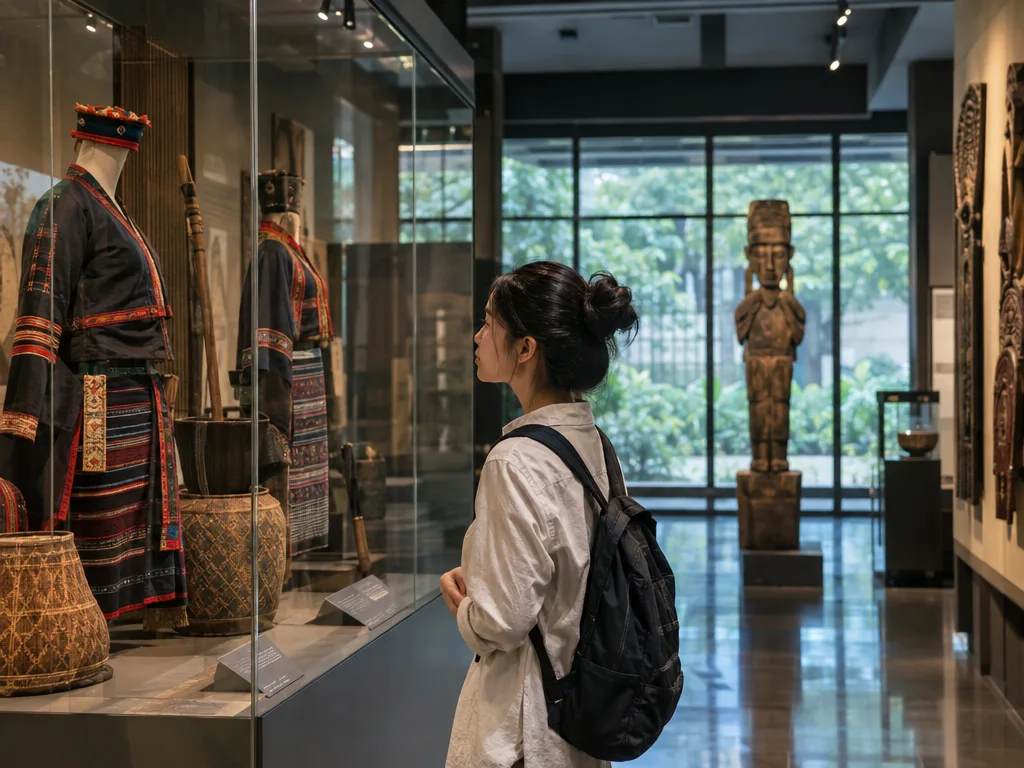
The Vietnam Museum of Ethnology is a strong rainy-day choice because its indoor exhibitions can support a substantial visit without depending on good weather. The museum presents the cultural diversity of Vietnam’s ethnic groups through exhibitions, research, educational activities, and changing programmes. Its official visitor information lists an address on Nguyen Van Huyen Street in Nghia Do and advises visitors to check current opening details before travelling.
Rather than trying to see everything, choose a question for your visit. How do homes express climate and family life? Which objects show skilled making? What differences appear between everyday tools, clothing, and ceremonial material? Looking for answers gives the visit more shape than photographing display cases at random.
This is especially useful for families and first-time visitors who want cultural background before exploring craft villages or neighbourhood markets. The museum’s educational areas and family-oriented activities may change, so confirm the current programme on the official site. Even without a scheduled activity, the exhibitions provide a thoughtful indoor reset after a wet morning.
Vietnam National Fine Arts Museum for a visual route
For travellers who prefer paintings, sculpture, ceramics, lacquer, folk art, and architecture, the Vietnam National Fine Arts Museum offers another substantial indoor anchor. Its official site describes collections spanning Vietnamese art from early history to the present, including traditional applied art, Vietnamese ceramics, lacquer paintings, national treasures, and educational activities. The museum is on Nguyen Thai Hoc Street in Ba Dinh.
Plan a visual route rather than a chronological test. Begin with one medium that interests you, such as lacquer or ceramics, then compare how artists use surface, colour, symbolism, and scale. Move slowly enough to notice details that are easy to miss in a crowded highlight hunt. If a temporary exhibition is running, treat it as an optional second chapter, not the reason to build the whole day around a date that may change.
Build a covered culture-and-coffee route
A rainy-day route should have a clear order: indoor visit first, short transfer second, food or coffee third. This keeps the most weather-sensitive part of the day simple. One practical plan is to choose either the Ethnology Museum or the Fine Arts Museum, then continue to a nearby café or casual meal after checking the current weather and road conditions.
Do not measure success by the number of districts crossed. A good route may include only two substantial stops. Leave time to dry off, charge your phone, and decide whether the rain is easing. If you are using a ride-hailing service, confirm the pickup point away from a narrow entrance or busy traffic flow. If you are walking, use the map to identify broad streets and sheltered building entrances rather than assuming every shortcut will be comfortable in a downpour.
- Choose a museum with enough indoor content for at least one unhurried hour.
- Keep the second stop within a manageable transfer rather than on the opposite side of the city.
- Carry a small plastic bag for a wet umbrella or phone protection.
- Use a café as a pause, not as a promise that a particular table or room will be available.
- Check museum pages and venue social channels on the day for closures, exhibitions, or changed hours.
Look for hidden gems in Hanoi’s everyday cultural details
Not every hidden gem needs a famous name. On a rainy day, pay attention to the details around a cultural visit: an old institutional façade, a quiet lane beside a museum, a covered market edge, a small bookshop, or a neighbourhood coffee room above street level. These are suggestions for observation rather than guaranteed attractions. Businesses and access arrangements change, and a doorway that looks open may be private.
Use a respectful discovery method. Read signs before entering, ask whether photography is welcome, and keep your voice low in shared residential or cultural spaces. If a small café has limited seating, order before settling in and avoid occupying a table through the busiest period. A hidden place remains enjoyable only when visitors do not turn it into a disruption for the people who use it every day.
Try a “one object, one street” exercise
After leaving a museum, choose one object, material, or idea that stayed with you. Then walk only as far as the weather comfortably allows and look for a related detail in the neighbourhood: a tiled frontage, a craft display, a plant-filled courtyard, a sign in an older script, or a repair workshop. The connection does not need to be historically exact. It is a way to carry the museum experience back into the living city.
Rainy-day alternatives beyond the major museums
If the main museums do not fit your interests, make the same structure work with other indoor or partly covered experiences. Look for a small gallery, a cultural performance venue, a book café, a craft demonstration, or a market visit timed between heavier showers. Confirm details directly because independent spaces can have irregular hours and some programmes require advance booking.
Craft-focused travellers can use a rainy day for research before visiting a village on a clearer day. Read about ceramics, silk, lacquer, or paper traditions, then decide which material you want to see in use. This gives a future excursion more purpose and reduces the temptation to buy the first souvenir that looks attractive. If you do visit a workshop, ask whether the activity is a demonstration, a class, or a retail setting; expectations and etiquette differ.
For a more local-feeling afternoon, pair an indoor cultural stop with an ordinary meal. Choose a busy but orderly restaurant or food stall, observe how tables and condiments are used, and keep the order simple if the menu is unfamiliar. Rain is not a reason to treat local places as a performance. Eat, pay clearly, and make space for the next customer.
How to plan around changing weather
Use a flexible three-part schedule
Divide the day into an anchor, a buffer, and an optional finish. The anchor is the museum or indoor activity you most want to experience. The buffer is lunch, coffee, or a slow indoor pause. The optional finish might be a short walk, a second exhibition, or an early return to your accommodation. If the rain intensifies, remove the optional finish first.
Start earlier when possible, but do not assume that every venue opens at the same time. The official pages for the Vietnam Museum of Ethnology and Vietnam National Fine Arts Museum publish visitor information, and those details are the right place to confirm current hours, fees, exhibitions, and holiday changes before leaving. Weather forecasts are useful planning tools, not guarantees; keep a small time margin for traffic and wet crossings.
Dress and move for comfort
Wear shoes that can handle slick pavement and dry reasonably quickly. A lightweight outer layer is easier to manage indoors than a heavy coat. Keep valuables in a closed cross-body bag, and protect paper tickets or printed directions from spray. When crossing a road, stay predictable, avoid sudden reversals, and choose a wider crossing point when visibility is poor.
Rain can make scooters and cars harder to see, especially at junctions where umbrellas block sightlines. Give yourself more time than a dry-weather map estimate suggests. If a route feels uncomfortable, take a short ride rather than forcing a walk simply because it looked close on a map.
A sample hidden-gems day for different travellers
For culture-focused visitors
Choose the Ethnology Museum as the main visit, spend time with one exhibition theme, take a nearby meal, and use the afternoon to read about a craft tradition you may explore later. This plan gives context without turning the day into a lecture.
For art-minded visitors
Use the Fine Arts Museum as the anchor, choose two collections or materials to compare, then pause for coffee before deciding whether a gallery or creative space is practical. Keep the second stop optional so a sudden shower does not make the day feel like a failure.
For slow travellers
Pick one museum, one meal, and one comfortable indoor pause. Notice the transition between them: wet balconies, covered shopfronts, street sounds, and the changing pace of traffic. A slower itinerary is not a reduced itinerary; it is a better match for the conditions.
Practical etiquette for discovering quieter places
Ask before photographing people, homes, workshops, or private collections. Do not enter a courtyard, stairwell, or narrow passage just because it appears in a social-media post. Keep voices and bags controlled in museums and galleries, and follow staff instructions even when a rule is not obvious. When a place is free, consider supporting it through a purchase, donation, or respectful repeat visit rather than treating access as an entitlement.
Most importantly, do not publish the exact location of a genuinely private or fragile space without permission. Hidden-gem travel works best when curiosity is balanced with restraint. The goal is to notice more, not to claim ownership of every quiet corner.
Final plan: choose depth over a checklist
The best hidden gems in Hanoi for rainy days are not necessarily the most secret. They are the places that remain rewarding when the weather changes: a museum with enough depth for a slow visit, a cultural space that adds context, a meal taken without rushing, and a short walk where ordinary details become visible. Choose one anchor, verify current information, protect time for pauses, and let the rain decide how ambitious the rest of the day should be.
JOIN THE CONVERSATION
Comments (0)
No comments yet. Be the first to share a thought.