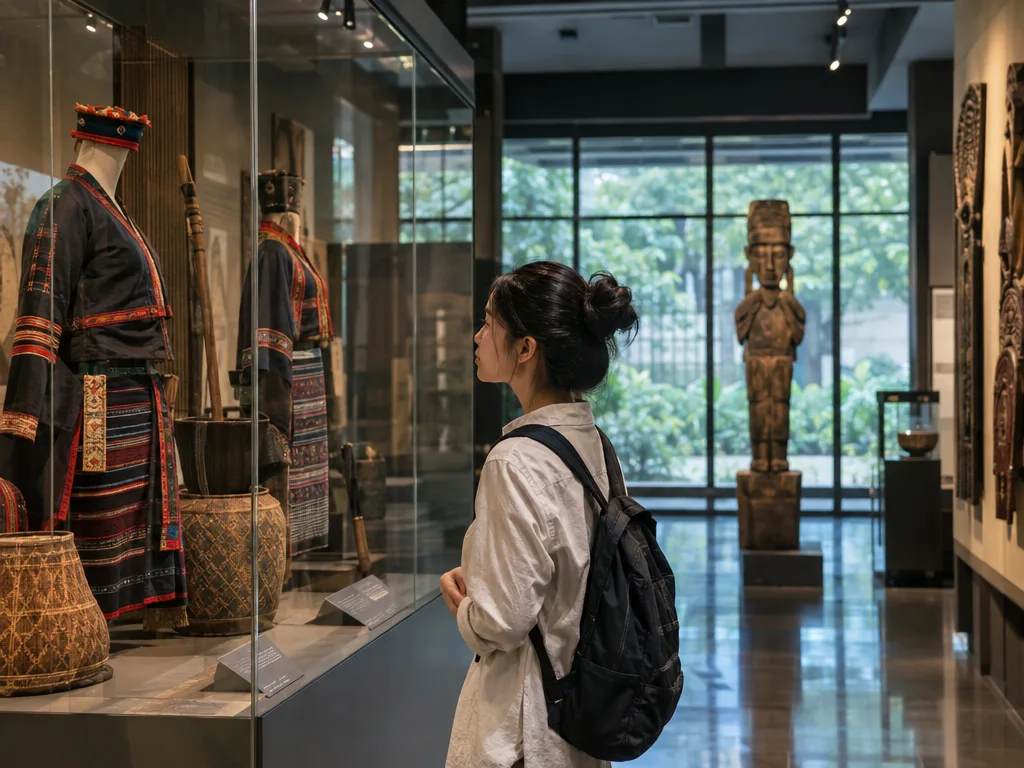
Rain can change the shape of a Hanoi day, but it does not have to send you back to a hotel room. Some of the city’s most rewarding discoveries are indoors: museums where a short visit opens a window onto Vietnam’s many communities, long history, craft traditions, and changing urban life. They are quieter alternatives to a checklist of famous sights and useful choices when heat, humidity, or a sudden shower makes outdoor plans less comfortable.
This guide focuses on overlooked or easily missed museums in Hanoi rather than trying to list every major attraction. It explains how to choose a place, how to build a flexible route, and how to visit respectfully. Opening information can change, so check the institution’s own website before leaving.
Why hidden museums in Hanoi are worth your time
A smaller or less frequently discussed museum can make Hanoi feel more understandable. Instead of moving quickly between landmarks, you get time to look closely at objects, read context, and notice how history connects to daily life. That slower pace suits a rainy day particularly well.
These visits also give you a useful alternative to weather-dependent plans. You can spend an hour or an afternoon indoors, then decide whether the rain has eased enough for a walk, a coffee stop, or a meal nearby. The point is not to collect the largest number of museums. It is to choose one that answers a question you genuinely have about Vietnam.
- Choose cultural history if you want a broad introduction to the country.
- Choose ethnology if you are interested in communities, homes, clothing, and traditions.
- Choose a focused collection if you prefer a shorter visit with one clear theme.
- Leave space before and after the museum so the day does not feel like a race.
Vietnam Museum of Ethnology: a thoughtful rainy-day anchor
The Vietnam Museum of Ethnology is one of the strongest choices for travellers who want cultural depth without relying only on the Old Quarter. Its official visitor information describes permanent exhibitions about Vietnam’s 54 ethnic groups, alongside temporary exhibitions and virtual exhibition material. The museum also presents research and educational activities, including programmes designed for families and schools.
That range makes it more than a room of objects. You can approach the visit through material culture, architecture, languages, family life, or the ways communities express identity. Give yourself time to read rather than treating every display as a quick photo stop. If you are travelling with children, ask about the educational areas and activities when you arrive; the programme can vary.
How to plan the visit
The museum’s official site lists a visitor address on Nguyen Van Huyen Street in Nghia Do and states that it operates from 8:30 to 17:30 every day except Mondays and the New Year holiday. It also publishes ticket information. Because schedules and visitor arrangements can change, use those details as a starting point and confirm them on the official website before travelling.
Allow extra time for the journey from central Hanoi. On a wet day, a direct ride may be more comfortable than combining several outdoor stops. Once there, begin with the galleries that match your interests instead of trying to absorb everything. A quiet meal or café break afterwards can help turn the museum into the centre of a half-day plan.
Vietnam National Museum of History: a compact route through time
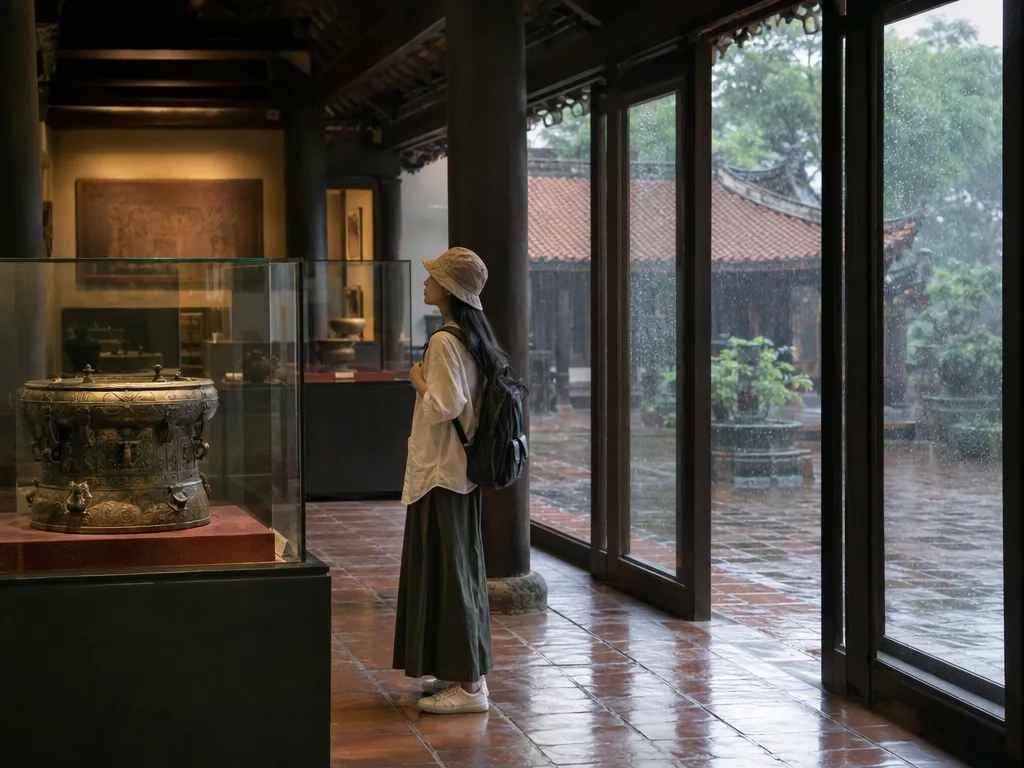
The Vietnam National Museum of History offers a different kind of rainy-day experience. Its official website presents permanent and special exhibitions, archaeological material, national treasures, research, and educational content. The museum’s collections can help visitors connect early Vietnamese history, regional exchange, political change, and material culture across a longer timeline.
This is a good choice when your question is broad: How did Vietnam’s past develop? Which objects reveal changing technologies or beliefs? How can a museum make a city’s monuments easier to understand? Rather than trying to memorise dates, choose a handful of objects and read their labels carefully. Look for materials, scale, craftsmanship, and evidence of contact between regions.
Making a museum visit manageable
The museum’s official information lists morning and afternoon visiting periods, notes that it is closed on Mondays, and gives locations including Trang Tien and Tran Quang Khai in Hoan Kiem. Check the current visitor information before setting out, especially if you are planning around a temporary exhibition or a tight train, flight, or dinner reservation.
Its central location makes it easier to pair with an indoor café or a short French Quarter walk if the weather improves. If the rain continues, keep the day simple: museum, meal, and one nearby indoor stop is enough. A focused two-hour visit is usually more satisfying than adding another distant attraction just to make the itinerary look full.
How to choose between the two museums
Both museums can work as hidden gems for visitors who have already seen the obvious highlights, but they serve different moods. The Museum of Ethnology is especially useful if you want to understand the diversity of communities and everyday cultural expression. The National Museum of History is better when you want a chronological or archaeological framework for Vietnam’s past.
- Choose the Museum of Ethnology for community life, material culture, educational displays, and a broader social perspective.
- Choose the National Museum of History for archaeology, historical collections, national treasures, and a longer time span.
- Choose based on location if rain is heavy; a practical visit is better than an ambitious cross-city route.
- Choose one museum if you are tired. Depth and attention matter more than ticking off two names.
If you have two rainy days, visit them separately. The contrast between social history and national history can make both experiences richer, while forcing both into one day may leave you mentally overloaded.
A flexible rainy-day itinerary in Hanoi
Option one: culture first
Start with the Vietnam Museum of Ethnology and spend your best attention there. Follow with a meal in the surrounding area, then use the afternoon for a café, bookshop, or another indoor activity. This works well for travellers who want a calm day away from the busiest central streets.
Option two: central history
Begin at the Vietnam National Museum of History, then take a slow meal break in or near the French Quarter. If the rain softens, add a short walk rather than a long route. You can look at façades, tree-lined streets, or public spaces without committing to an all-day outdoor itinerary.
Option three: the weather check
Keep the morning uncommitted. Check the forecast and the official museum information, choose the easier journey, and treat the second half of the day as optional. This is often the best plan in Hanoi’s changeable weather because it protects your energy and leaves room for an unexpected neighbourhood discovery.
Practical etiquette for visiting Hanoi museums
Read the visitor guidance at the entrance and follow instructions about photography, bags, touching objects, and quiet areas. Museums preserve shared heritage, so a respectful visit matters more than getting a perfect picture. Keep your voice low in galleries, avoid blocking labels, and give other visitors space.
Dress comfortably for walking and bring a light layer for air-conditioned rooms. A small notebook can be more useful than a camera if you want to remember names, themes, or questions. If a display raises a question, ask staff politely; museum teams can often point you towards a gallery, programme, or resource you might otherwise miss.
Do not assume that every gallery, temporary exhibition, ticket arrangement, or educational activity will be available on every visit. Confirm current details through the museum’s own channels, especially on public holidays or during installation periods. Treat online information as a planning aid, not a substitute for checking before you go.
How to make a hidden-museum day feel local
The most local-minded approach is to slow down. Have breakfast or coffee before the museum, travel without packing the schedule too tightly, and notice the neighbourhood around the institution. A museum visit becomes more meaningful when it is connected to the city outside: the streets people use, the food available nearby, and the ordinary routines continuing despite the weather.
Use the rain as a reason to change pace rather than as a problem to defeat. You might spend longer with one gallery, return to a display you did not understand at first, or write down a question to explore later. Hanoi’s hidden gems are not always secret addresses. Sometimes they are places you pass over because you have not given them enough time.
For a first visit, choose one museum, verify its current information, and leave the rest of the day flexible. That simple plan can turn an inconvenient forecast into a thoughtful introduction to Hanoi’s history and cultural life.
A simple checklist before you leave
Before heading out, make five quick decisions. First, decide whether you want social history or a chronological history visit; that usually makes the museum choice obvious. Second, check the official website for the current opening pattern, ticket information, exhibitions, and any visitor notice. Third, estimate the journey from your accommodation with the weather in mind. A route that feels easy in dry weather can become tiring when pavements are wet and traffic is slow.
Fourth, choose one nearby backup that does not depend on sunshine. It might be a café, a covered market, a bookshop, or simply a meal in the same broad area. Fifth, set a stopping point. If you are no longer reading, looking, or enjoying the visit, leave before fatigue turns a good museum into a chore.
This checklist is also useful for families and mixed-interest groups. One person can focus on architecture or objects, another on stories of daily life, and children can look for shapes, materials, or colours. Agree on a meeting point and a relaxed end time rather than expecting everyone to move through every gallery together.
Keep the day generous enough for small discoveries. Notice the street names, the shade under trees, the sound of rain on awnings, and the way a neighbourhood changes between a museum visit and a meal. These details are not separate from culture; they are part of how Hanoi is lived. A hidden-museum day works best when the institution gives you context, and the surrounding streets give that context a human scale.
JOIN THE CONVERSATION
Comments (0)
No comments yet. Be the first to share a thought.