Hanoi nightlife is not only about loud clubs or a single busy beer corner. For many visitors, the best evening is a sequence of smaller experiences: a cultural performance, a slow walk through the Old Quarter, live music in an intimate room, and a final drink or dessert somewhere that still feels connected to the street. This guide focuses on Hanoi nightlife for travellers who want atmosphere, local character, and flexibility rather than an all-night party.
Start by choosing the kind of night you actually want
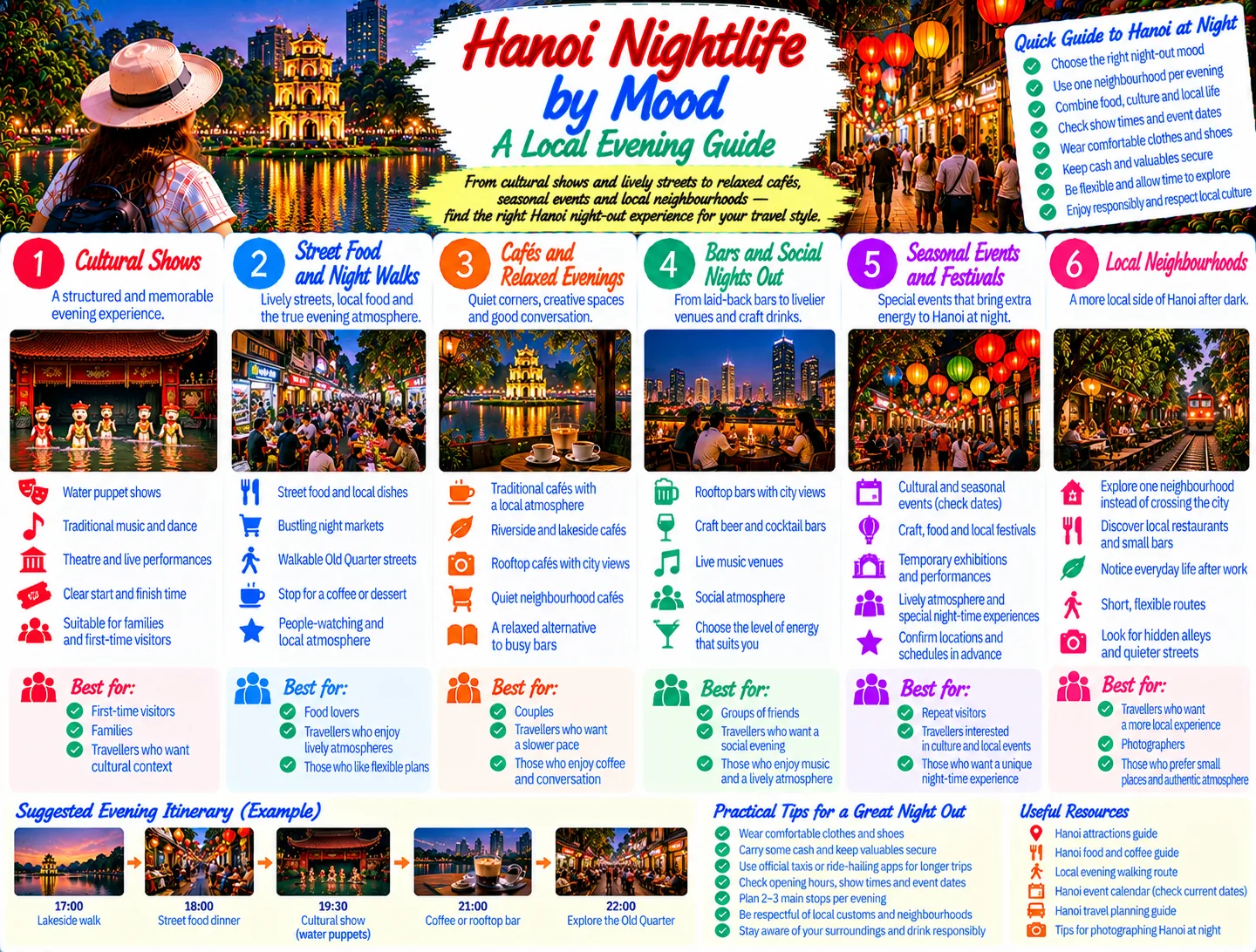
The most useful Hanoi nightlife plan begins with mood, not a checklist. The city can shift quickly after dark, but different neighbourhoods suit different evenings. The Old Quarter is the easiest starting point for a compact night because restaurants, bars, performance venues, small cafés, and pedestrian streets sit within a walkable area. Tay Ho offers a more spacious, lakeside feeling and tends to suit visitors looking for a slower dinner, a rooftop view, or a bar where conversation matters.
For a broad overview of the city after dark, our guide to the best things to do in Hanoi at night is a useful companion. This article takes a narrower approach: how to build an evening around music, culture, walking, and the small transitions between them.
- Choose the Old Quarter for density, street energy, and easy changes of plan.
- Choose Tay Ho when you want more room, a meal, or a view with your evening.
- Choose a performance first when you want the night to have a clear centrepiece.
- Choose live music or a cocktail bar when you prefer an unhurried, social finish.
Build an evening around a cultural performance
A show can make a Hanoi night feel more memorable than moving from one bar to the next. Traditional water puppetry is the classic example, but the wider principle is more useful than any single venue: book or check a performance first, then let the rest of the evening remain open. A scheduled show gives you a reason to arrive somewhere at a particular time without forcing every later decision.
Water puppetry works well for first-time visitors because it is visual, compact, and connected to Vietnamese village traditions. It is also an easy option for mixed groups: people who do not drink, families, couples, and solo travellers can all enjoy a performance without needing the same nightlife preferences. Treat it as the opening chapter rather than the entire night. Afterward, walk toward the surrounding Old Quarter streets for a meal, a café, or a quieter drink.
How to plan the performance-first option
- Check the venue’s current performance schedule through its own official channel before leaving your hotel.
- Allow time to reach the theatre and collect tickets; do not build a second reservation too tightly around the show.
- Keep the post-show plan within the same broad area so the evening does not become a race across the city.
- Use the walk afterward to decide whether you want food, music, or simply a slow circuit through the streets.
Hanoi’s cultural life extends beyond traditional theatre. Concerts, dance, exhibitions, and small creative events appear in different parts of the city, and schedules change. The site’s Art & Creative Spaces category is worth checking when you want to pair nightlife with galleries, studios, or independent cultural venues.
Use live music as the bridge between dinner and drinks
Live music is one of the easiest ways to enjoy Hanoi after dark without committing to a nightclub. A small band, jazz set, acoustic performance, or DJ-led evening can give a bar atmosphere without making conversation impossible. The key is to think in terms of room and timing. Some places are designed for a seated drink and background sound; others become performance venues once the music begins.
Published nightlife guides commonly group Hanoi’s music-led venues around the Old Quarter, where compact bars and historic streets create a lively setting. That concentration makes it possible to try one place, listen for a while, and leave if the volume or crowd is not right. It also means you can choose a venue based on the night’s energy instead of assuming the first stop must be the final one.
Questions to ask before choosing a music venue
- Is the music the main event, or is it background entertainment?
- Does the room suit sitting and conversation, or is it organised around standing and dancing?
- Is the style likely to match your group: acoustic, jazz, pop, electronic, or a mixed playlist?
- Does the venue publish a current schedule, or should you treat the performance as subject to change?
Do not rely on an old social post for a current line-up, cover charge, or closing time. Search the venue’s current page or contact it directly on the day. This is especially important for smaller venues, where programming and opening arrangements can change more often than a travel guide can be updated.
Choose a bar by atmosphere, not by reputation
Hanoi has several distinct drinking styles, and the right choice depends on what you want the next two hours to feel like. A bia hoi stop is casual, social, and closely tied to street life. A cocktail bar is better when you want a slower pace and more attention to the drink. A rooftop or lakeside lounge suits travellers who want a view. A compact music bar can work when you want a little noise and the possibility of meeting people.
VietnamOnline’s current Hanoi nightlife recommendations describe a spread of venues rather than one uniform scene: Old Quarter bars with live performances, intimate cocktail rooms, jazz-oriented spaces, and lakeside options around Tay Ho. That variety is useful because it suggests a better search strategy. Instead of asking for the “best bar in Hanoi,” decide whether you want live music, a quiet cocktail, a social beer, or a view, then filter from there.
A simple atmosphere match
- For a first drink: choose somewhere relaxed enough to discuss the rest of the night.
- For a local-feeling pause: look for a busy street setting and order simply rather than turning the stop into a tasting session.
- For a date: prioritise seating, sound level, and a route that does not require multiple car rides.
- For a solo evening: a bar counter, live set, or compact café can feel more natural than a large lounge.
Our guide to an easy evening out in Hanoi covers the value of keeping a night simple. The same principle applies here: two well-chosen stops often feel more satisfying than four places selected only because they appear on a list.
Make the walk part of the entertainment
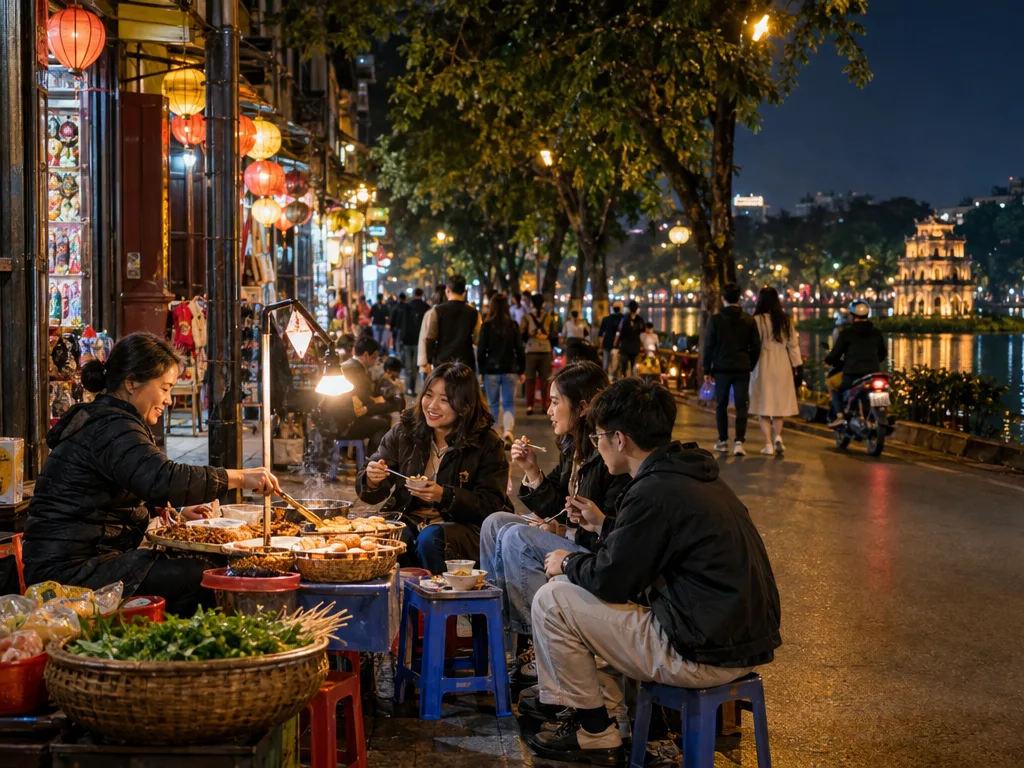
One reason Hanoi nightlife feels different from a purpose-built entertainment district is that the spaces between venues are part of the experience. A short walk can take you from a busy lane to a quiet residential edge, from restaurant noise to a temple wall, or from a brightly lit intersection to a dark café entrance. You do not need to turn the evening into a formal walking tour; simply leave enough time between stops to notice the change.
The Old Quarter is particularly useful for this style of night. Streets are close enough to connect several moods, but they are not identical. A place that feels crowded at one corner may become calm a few minutes later. If you enjoy seeing how a city changes after sunset, browse the site’s Hanoi Walking Routes category before you go and borrow the idea of a route rather than following it rigidly.
Walk with a loose structure
- Pick one starting landmark or venue.
- Choose one nearby street or square as your direction, not as a fixed destination.
- Stop when a café, food stall, bookshop event, or music room feels inviting.
- Use a taxi or ride-hailing service for a longer transfer rather than forcing a cross-city walk late at night.
Keep your phone, wallet, and bag secure in crowded areas, and be patient when crossing roads. The point of a flexible walk is to stay observant, not to move quickly or prove how much ground you can cover.
Try a night market or pedestrian area without making it the whole plan
Pedestrian streets and night markets are useful for adding movement and local colour to an evening. They are better treated as a middle section than as a complete itinerary. You can browse snacks, watch street activity, and take photographs, then move on when the crowd becomes tiring. This approach also leaves room for an unplanned discovery, which is often more rewarding than trying to visit every stall.
Night markets vary by day, location, and season, so check current local information before travelling. Do not assume that a market will have the same layout, operating hours, or entertainment programme every time you visit. If your evening depends on a specific event, confirm it shortly beforehand.
For more ideas that connect short outings with changing city life, the Local Events & Weekend Activities category can help you look beyond permanent nightlife venues. A concert, craft fair, public performance, or weekend gathering may offer a more distinctive night than another bar, especially if you have already seen the main Old Quarter route.
Plan three versions of the same night
A flexible plan is easier when you prepare three versions before you leave: a cultural night, a music night, and a low-energy night. You do not need to decide immediately which one you will follow. The weather, your energy, and the mood of your group can make the choice for you.
Version one: culture and conversation
Start with a performance, eat nearby, then finish with tea, coffee, or one quiet drink. This is a strong choice for a first night, a family group, or anyone who wants a clear experience without late hours.
Version two: music and movement
Begin with dinner, walk through a lively area, choose a venue with a confirmed current music programme, and keep a second option nearby. This version works best when everyone agrees on the desired volume and pace.
Version three: slow Hanoi after dark
Eat early, take an unhurried walk, pause at a café, and choose a small bar only if the atmosphere feels right. This is not a lesser night. It gives you time to observe street life and avoid spending the whole evening navigating between reservations.
Practical decisions that make the night easier
Check the weather before choosing a rooftop, lakeside venue, or long walking route. Confirm opening hours, ticket availability, performance times, and any entry requirements directly with the venue because these details can change. Save the address in both English and Vietnamese when possible, especially if you are using a taxi or ride-hailing service.
Keep the first stop easy to reach and avoid planning a distant final destination. If you are drinking, pace yourself and arrange a safe ride rather than driving. Carry enough battery for maps and communication, but do not spend the whole night looking down at a screen. A small amount of preparation leaves more room for the spontaneous parts of Hanoi nightlife.
Most importantly, respect the setting. A street-side beer corner, a family restaurant, a theatre, and a late-night bar all have different social rhythms. Observe before ordering, keep your voice reasonable in residential areas, and remember that a local-feeling night comes from fitting into the city rather than treating it as a stage set.
Final thought: let the evening change shape
The best Hanoi nightlife plan is not necessarily the busiest one. Start with one reliable anchor, such as a performance, a dinner neighbourhood, or a confirmed music set, then leave space for the streets to influence what happens next. With the Old Quarter for density, Tay Ho for a slower mood, and Hanoi’s cultural and creative spaces for alternatives to clubbing, you can build an evening that feels social, local, and easy to adjust.

JOIN THE CONVERSATION
Comments (0)
No comments yet. Be the first to share a thought.