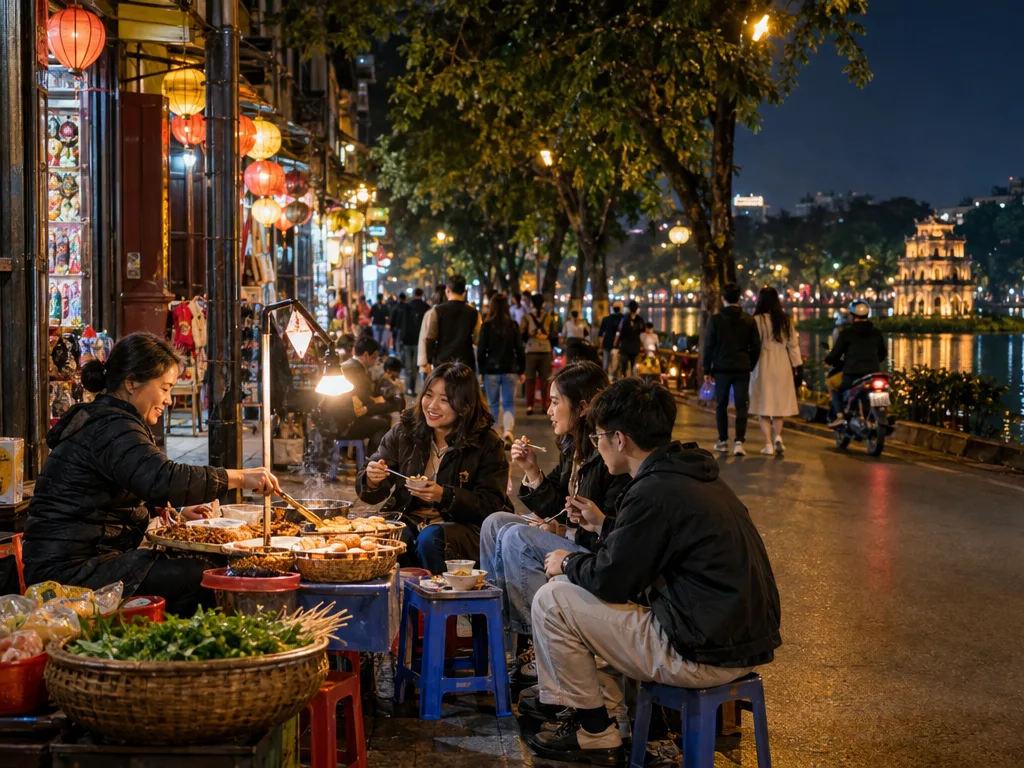
Hanoi nightlife is not one fixed scene. It is a sequence of choices: a lakeside walk or a crowded street, a performance or a plastic stool, a planned destination or an evening that changes when the city becomes interesting. The best Hanoi night itinerary leaves room for that variety. Start with one anchor activity, keep the next stop nearby, and choose your finish according to energy rather than a checklist.
Choose the kind of Hanoi night you actually want
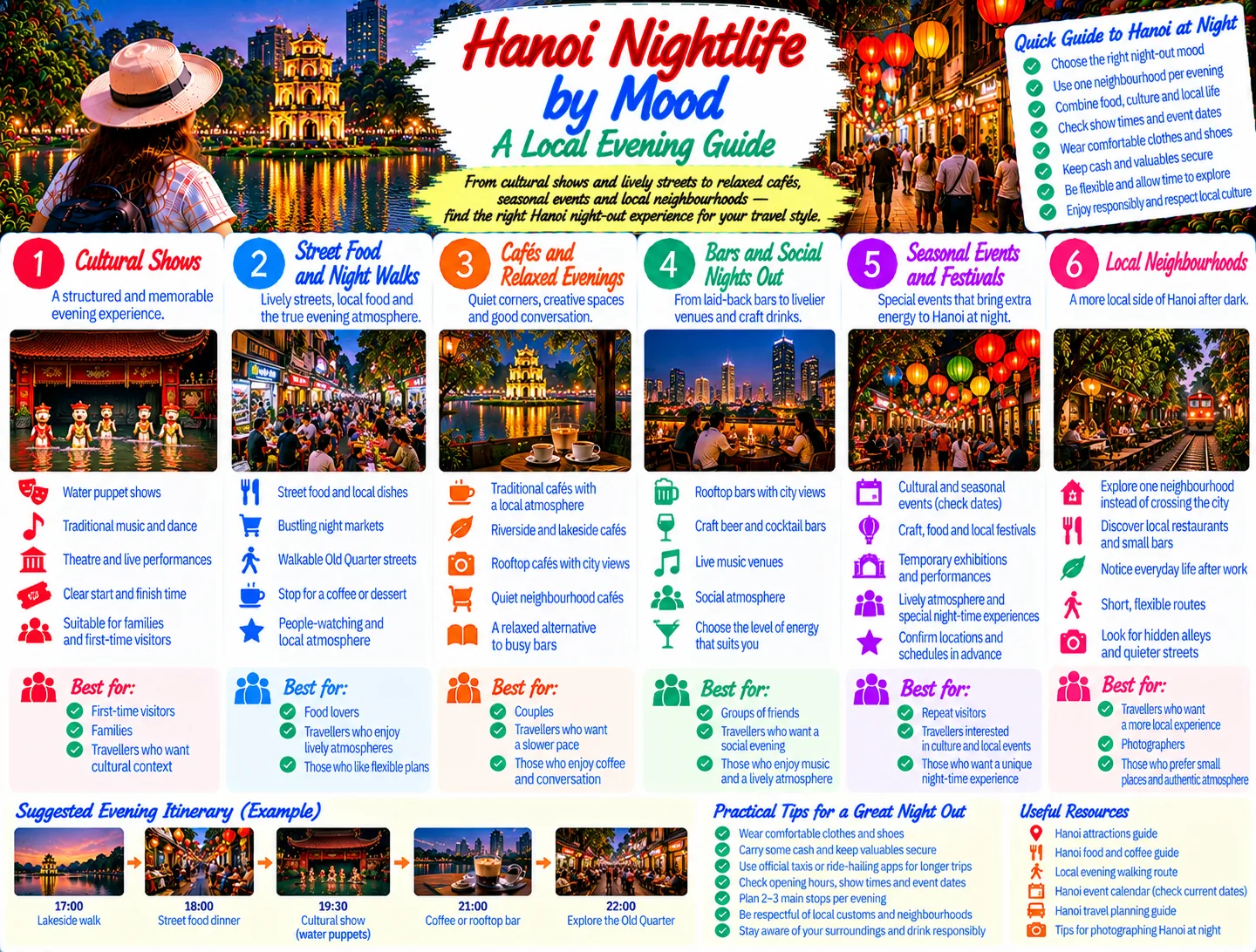
Before deciding where to go, name the mood. Visitors looking for Hanoi nightlife often mix together very different experiences, and that is how evenings become rushed. A cultural night might centre on a water puppet performance, an evening walk, or a heritage site with a night programme. A social night might focus on street food, bia hoi, conversation, and people-watching. A quieter night might mean the lake, a small café, or a live performance where you can sit for an hour.
Hanoi’s official tourism guide presents the city as a meeting point of old streets, lakes, street culture, food, arts, and after-dark activities. That is useful because it suggests a better planning principle: do not try to “do nightlife” as if it were one attraction. Pick one main reason to go out, then add one flexible stop.
- For culture: choose a performance or a night tour, then walk and eat nearby.
- For atmosphere: begin around Hoan Kiem or the Old Quarter and let the street scene shape the evening.
- For food: make the meal the anchor and treat entertainment as a bonus.
- For a low-key night: choose a short route, a comfortable seat, and an easy way back.
A flexible route through the Old Quarter and Hoan Kiem
The most adaptable Hanoi evening route begins around Hoan Kiem Lake and moves into the Old Quarter. This works because the area gives you several decisions without requiring a long transfer: a promenade for a slower start, historic streets for browsing, small eateries for a meal, and lively corners for a final drink or dessert.
Start with a walk, not a reservation
Use the first part of the evening to notice how the district changes. Around the lake, the pace can feel more open; farther into the Old Quarter, streets become tighter, busier, and more layered. Walk with a destination in mind but do not treat every turn as a detour. A short pause for a shopfront, a street-side meal, or a shaded corner can be more memorable than adding another named attraction.
Build in a decision point
After the first walk, decide whether you want to continue on foot or settle somewhere. If the streets feel crowded, choose a nearby place rather than crossing the city for a supposedly perfect venue. If the atmosphere is comfortable, keep moving and make the route your entertainment. This approach is especially useful for first-time visitors who want Hanoi at night without committing to a bar crawl.
Make a cultural performance the evening’s anchor
A performance can give your night a clear shape. Thang Long Water Puppet Theatre is highlighted by the official national tourism guide as a place to experience an iconic Northern Vietnamese folk art. The important planning lesson is not simply to add “water puppets” to a list. It is to treat a performance as the fixed centre of an evening and plan the surrounding walk or meal around the confirmed session.
Check the venue’s current programme and booking information directly before you go. Schedules can change, and a page that was accurate for an earlier visit may not describe tonight’s availability. Arrive with enough time to find the entrance and settle in, then keep the post-show plan simple: a nearby meal, a short walk, or a quiet drink. Do not book a distant restaurant immediately afterward unless you have allowed for the performance ending, crowds, and traffic.
The same principle applies to concerts, theatre, and other live events. A cultural night feels more relaxed when you have only one timed commitment. Everything else can remain optional.
Try Hanoi street food and bia hoi thoughtfully
Food is one of the strongest reasons to go out in Hanoi, but a useful night is not a race to collect dishes. Choose a place where you can see how the meal is prepared, understand the ordering process, and sit without blocking the people who live and work nearby. If a counter is busy, watch for a moment before choosing where to stand or sit.
Bia hoi is part of Hanoi’s familiar street culture, and the tourism authority includes it among the city’s signature flavours. For a visitor, the appeal is as much about the social rhythm as the drink: small tables, quick conversations, and a street that remains active around you. Keep expectations modest and follow the house routine. Ask the price before ordering when anything is unclear, carry small notes where practical, and do not assume that every busy corner is designed for lingering.
- Start with one dish and add only what you can comfortably finish.
- Use gestures or a translation app politely when a menu is unclear.
- Keep bags and phones secure in crowded areas without turning the meal into a security exercise.
- Leave room for dessert, coffee, or a second short stop rather than overplanning.
Use night markets and pedestrian areas with patience
Weekend night markets and pedestrian streets can be a natural part of a Hanoi evening, especially for visitors who want crafts, souvenirs, street displays, and people-watching in one area. The official tourism guide specifically points travellers toward weekend night markets and pedestrian streets, but these spaces work best when you accept their rhythm. They are social public environments, not a private shopping mall.
Browse slowly and compare before buying. If you photograph a person, a stall, or a performance at close range, ask first. Keep your group compact so that other pedestrians can pass. When a street becomes too congested, step aside rather than stopping in the middle of the flow. These small choices make the evening more comfortable for you and for residents using the same streets.
A market is also a good place to end a route because it offers several exit points. You can continue for another loop, stop for a snack, or leave as soon as the atmosphere feels too intense. That flexibility is more valuable than trying to visit every lane.
Plan transport around the part of the night that is timed
Transport matters most when your evening has a fixed start or finish. Hanoi Metro’s official site provides route maps, passenger guidance, ticket information, and operating notices. Its published network information includes Line 2A, Cat Linh–Ha Dong, and Line 3 information; use the official site to check the route and latest service notice rather than relying on an old travel post.
For a night centred in the historic core, walking and short local rides may be more practical than building a complicated cross-city route. If you are travelling to or from a metro station, check the last useful connection before leaving your accommodation. Do not confuse the existence of a metro line with a guarantee that it will suit a late-night return.
- Put the timed activity first and choose food or walking stops afterward.
- Save the address of your accommodation in Vietnamese and English.
- Allow extra time for crossing busy streets and finding entrances.
- Use current transport information on the day, especially around public holidays or major events.
Build three ready-made Hanoi night plans
The culture-first evening
Begin with a confirmed performance, then choose a nearby meal and take a short walk around the surrounding streets. This plan suits visitors who want a memorable cultural centre without filling the night with too many stops. Keep the final activity unstructured so the evening can end naturally.
The local-rhythm evening
Start with Hoan Kiem Lake, walk into the Old Quarter, eat one or two casual dishes, and pause wherever the street feels welcoming. Add a market or pedestrian area if it is operating during your visit. This is the best plan when you want atmosphere more than a list of attractions.
The gentle evening
Choose an early meal, a short lakeside walk, and a café or seated performance. Leave before tiredness turns every decision into a problem. A gentle night is not a lesser version of Hanoi nightlife; it is often the easiest way to notice architecture, conversations, and daily routines after the busiest part of the day.
Small etiquette choices improve the experience
Nightlife in Hanoi overlaps with ordinary life. People are commuting, shopping, meeting friends, delivering food, and returning home while visitors are sightseeing. Stay aware of doorways, narrow pavements, shop entrances, and residential spaces. Dress comfortably for the weather, keep your voice reasonable near homes, and ask before entering a small venue with an uncertain purpose.
Be flexible about pace. A venue may be full, a street may be louder than expected, or rain may change the route. Keep one backup idea that does not depend on a reservation, such as a nearby walk or a café. The aim is not to prove that you completed Hanoi after dark. It is to spend a few hours in the city’s evening rhythm with enough attention to enjoy what is actually happening.
Final checklist for a better night out
- Choose one main purpose: culture, food, atmosphere, or rest.
- Keep the first and last stops close to the centre of your route.
- Confirm timed programmes and transport information from current official sources.
- Carry a charged phone, a small amount of cash, and your accommodation details.
- Keep plans flexible around weather, crowds, and venue availability.
- Respect residents, workers, performers, and other diners.
Hanoi nightlife is easiest to enjoy when you give the evening a loose frame rather than a strict itinerary. One meaningful activity, one good meal, and one unplanned pause are enough to make the city feel vivid after dark.
That flexible structure also helps different travellers share the same city. A couple can split after dinner and meet for a walk, a family can choose an earlier cultural stop, and a solo visitor can change plans without losing the thread of the evening. The strongest plan is not the one with the most venues; it is the one that leaves enough attention for Hanoi itself.
JOIN THE CONVERSATION
Comments (0)
No comments yet. Be the first to share a thought.