Hanoi rewards travellers who leave the famous loop around Hoan Kiem Lake. Beyond the Old Quarter, the city opens into ancient ramparts, riverside structures, quiet museums and neighbourhood corners where the pace feels more local. This guide to hidden gems in Hanoi is designed for curious visitors who want substance rather than a rushed checklist. Each stop has a different character, and together they make a useful half-day or full-day plan.
1. Start at Co Loa, Hanoi’s ancient spiral citadel
Co Loa is one of the most rewarding choices when you want a hidden gem in Hanoi with real historical depth. The ancient fortified site lies in Dong Anh District, north of the Red River, roughly 17 kilometres from central Hanoi. Its name is commonly explained as “ancient spiral”, a reference to the concentric shape of its ramparts and moats. Archaeological evidence connects the area with the Phung Nguyen and Dong Son cultures, while Vietnamese history and legend associate it with An Duong Vuong and the kingdom of Au Lac.
The appeal is not a single spectacular building. It is the feeling of moving through a layered landscape: earthen walls, village roads, temple compounds, mature trees and open stretches that make the scale of the old settlement easier to imagine. Walk slowly and notice how the site blends into present-day life instead of being isolated behind a grand entrance.
How to experience it
- Allow several hours rather than treating Co Loa as a quick photo stop.
- Read a little about the An Duong Vuong and My Chau–Trong Thuy legends before arriving; the landscape becomes easier to understand.
- Wear comfortable shoes, because the experience is best when you walk between separate points rather than staying in one courtyard.
Co Loa suits travellers who enjoy archaeology, local stories and quiet spaces. It also gives families and repeat visitors a change of rhythm from the concentrated streets of the centre. If you are building a broader route, pair it with the site’s surrounding villages rather than trying to add several distant attractions on the same day.
2. Follow the Red River edge near Long Bien Bridge
Long Bien Bridge is well known, but the riverside experience around it is still one of Hanoi’s best underused urban walks. The historic cantilever bridge crosses the Red River between Hoan Kiem and Long Bien. It was built between 1899 and 1902 and opened in 1903, carrying trains, vehicles, bicycles and pedestrians across a structure that has witnessed enormous changes in the city.
Instead of visiting only for a bridge photograph, use it as a threshold. Look at the steel framework, watch the river traffic and pay attention to the changing views between the city side and the quieter spaces below. The contrast is the attraction: dense streets above, broad river light and cultivated land in the floodplain below.
A practical way to explore is to approach from the Old Quarter, cross only as far as feels comfortable, then return by a different riverside street or continue towards the Long Bien side. The route is more atmospheric early in the day or near sunset, but conditions can change quickly, so keep the walk flexible and avoid standing in active traffic lanes.
For another perspective on moving through the city, compare this outing with Hanoi’s walking routes for curious travellers. The bridge works especially well as part of a day that mixes a landmark with less formal neighbourhood exploration.
3. Take the Ceramic Road as a visual history lesson
The Hanoi Ceramic Mosaic Mural, often called the Ceramic Road, runs along the Red River dike system. The mural was created for Hanoi’s millennial anniversary and uses ceramic tesserae associated with Bat Trang, the pottery village near the capital. Its panels bring together historical motifs, cultural imagery, modern artwork and children’s drawings, so it feels less like one monument and more like a long public conversation about the city.
This is a strong hidden-gem choice for travellers who want something visual without entering another formal museum. The mural is easy to combine with Long Bien Bridge because both belong to the same riverside geography. Rather than trying to see every section, choose a manageable stretch and pay attention to how the artwork changes beside roads, walls and everyday traffic.
Make the walk more rewarding
- Go with time to stop; the details are small and the wall is more interesting at walking pace.
- Look for changes in artistic style instead of treating the mural as one repeated pattern.
- Use the route as a bridge between neighbourhoods, not as an isolated attraction.
The Ceramic Road is also a useful answer to the common search for unusual things to do in Hanoi when the weather is pleasant. It gives you a reason to explore beyond the postcard centre while staying connected to the city’s public spaces. For context on finding less obvious places, see this guide to Hanoi’s hidden corners without a checklist.
4. Spend a quiet afternoon at Hanoi Museum
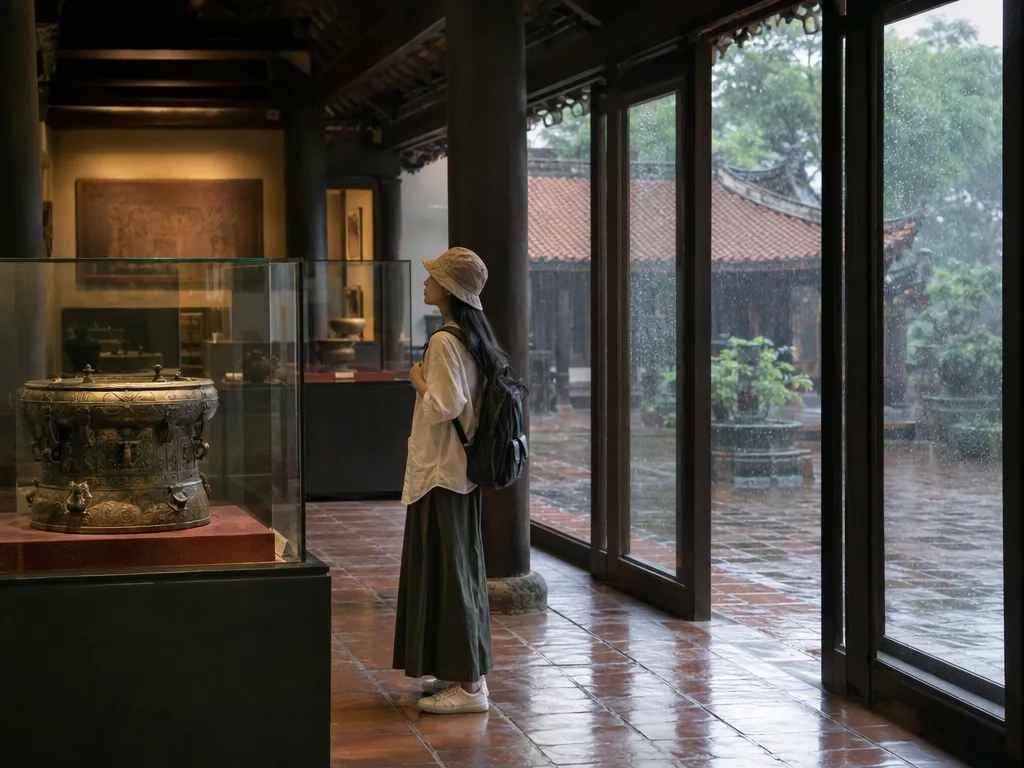
Hanoi Museum in Nam Tu Liem District is an easy place to overlook because it sits away from the historic core. Its inverted-pyramid building is distinctive, but the real reason to visit is the chance to see Hanoi presented through objects, history, culture, heritage and architecture rather than through a single famous monument. The collection is described as containing more than 50,000 artefacts, giving the museum a broad scope.
The museum is useful when you want a quieter, more structured stop after several hours outdoors. It can help connect details seen around the city: ceramics, old coins, decorative forms, domestic objects and the changing shape of Hanoi. Because it is outside the usual Old Quarter circuit, check current visitor information before setting out and allow travel time.
Do not rush through every display. Choose a theme—urban history, material culture or architectural change—and use the visit to sharpen what you notice later in the streets. The building itself is also worth viewing from different angles, particularly if you enjoy modern civic architecture.
Travellers interested in creative places can continue their reading with the site’s guide to Hanoi’s art and creative spaces. It is a natural pairing because the museum provides historical context while smaller creative venues show how the city’s visual culture keeps evolving.
5. Meet Vietnam’s many cultures at the Museum of Ethnology
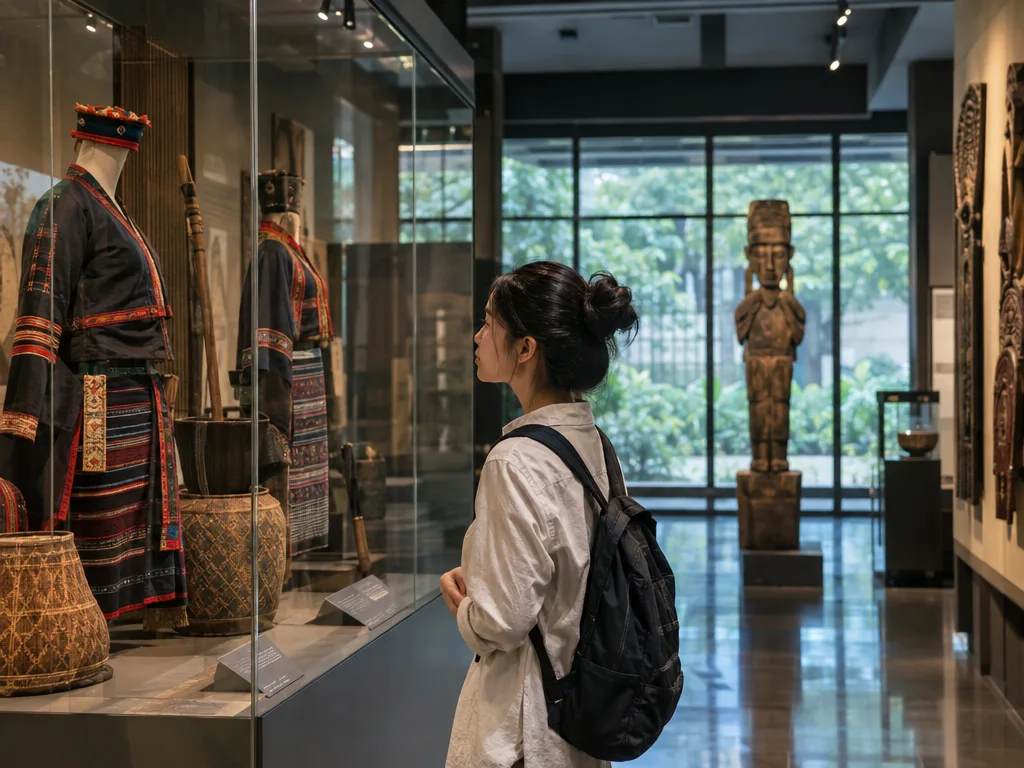
The Vietnam Museum of Ethnology in Cau Giay District is another excellent choice for visitors searching for less touristy things to do in Hanoi. It focuses on the country’s 54 officially recognised ethnic groups and combines indoor collections with an open-air exhibition area. That combination makes the museum feel more expansive than a conventional gallery: you can move from objects and explanatory displays to full-scale architectural examples and outdoor space.
The museum was opened to the public in 1997 and later added a second building focused on Southeast Asian ethnology. Its collection includes thousands of objects and visual records, but the most useful approach is not to chase a number. Instead, notice how houses, clothing, tools, ritual objects and everyday designs reflect different environments and ways of living.
Why it belongs on a hidden-gems itinerary
This is a good destination for a hot or rainy day, for families who want more substance than a photo stop, and for travellers who have already seen the main central sights. It also broadens a Hanoi trip beyond the city’s own history. Plan enough time for both the indoor and open-air sections, and confirm current opening information before visiting because museum arrangements can change.
For a people-focused route through Hanoi, pair the museum with the local neighbourhoods section and read this neighbourhood-by-neighbourhood guide before you go. The combination encourages observation rather than simply collecting attractions.
6. Turn the list into a realistic local-style day
The biggest mistake with Hanoi hidden gems is trying to visit all of them in one ambitious sweep. Co Loa is the out-of-centre historical choice. Long Bien Bridge and the Ceramic Road work together as a riverside walking cluster. Hanoi Museum and the Museum of Ethnology each deserve their own slower visit because they sit in different parts of the city.
For a half-day, choose one cluster. Start early at Long Bien Bridge, continue along a section of the Ceramic Road, then stop for a simple meal in a neighbourhood you pass through. For a history-focused day, make Co Loa the main destination and keep the rest of the schedule open. For a museum day, choose either Hanoi Museum or the Museum of Ethnology instead of forcing both into a tight timetable.
Use ride-hailing or a taxi for the longer transfers, but keep the final approach on foot where possible. Bring water, carry small cash for ordinary purchases, and dress for heat, sudden rain and uneven surfaces. Most importantly, treat these places as living parts of Hanoi. Speak quietly in temple or memorial areas, ask before photographing people, and leave room for ordinary streets to become part of the experience.
How to choose the right hidden gem in Hanoi
- For ancient history: choose Co Loa.
- For a memorable walk: combine Long Bien Bridge with the Ceramic Road.
- For architecture and urban history: visit Hanoi Museum.
- For cultural breadth: choose the Museum of Ethnology.
- For a first-time visitor with limited time: select one central riverside cluster rather than travelling across the city.
These choices work because they reveal different Hanois: the archaeological landscape north of the river, the industrial and wartime memory held in Long Bien, the public creativity of the dike, and the cultural histories collected in museums. They are not secret in the literal sense, and that is useful. You can reach them, learn from them and still experience a side of the capital that many short itineraries leave out.
Build in a little unplanned time as well. A side lane may lead to a family shrine, a small workshop or a view of the river that no search result would have suggested. The point of an off-the-beaten-path Hanoi itinerary is not to replace one checklist with another. It is to make space for context, conversation and the everyday details that explain why the city feels different from one district to the next.
Conclusion
The best hidden gems in Hanoi are not simply obscure addresses. They are places that change how you read the city. Walk the river edge, listen to the stories of Co Loa, study the Ceramic Road slowly or spend time with the collections at Hanoi’s museums. Choose one strong route, travel at an unhurried pace and let the ordinary spaces between attractions do some of the storytelling.
JOIN THE CONVERSATION
Comments (0)
No comments yet. Be the first to share a thought.