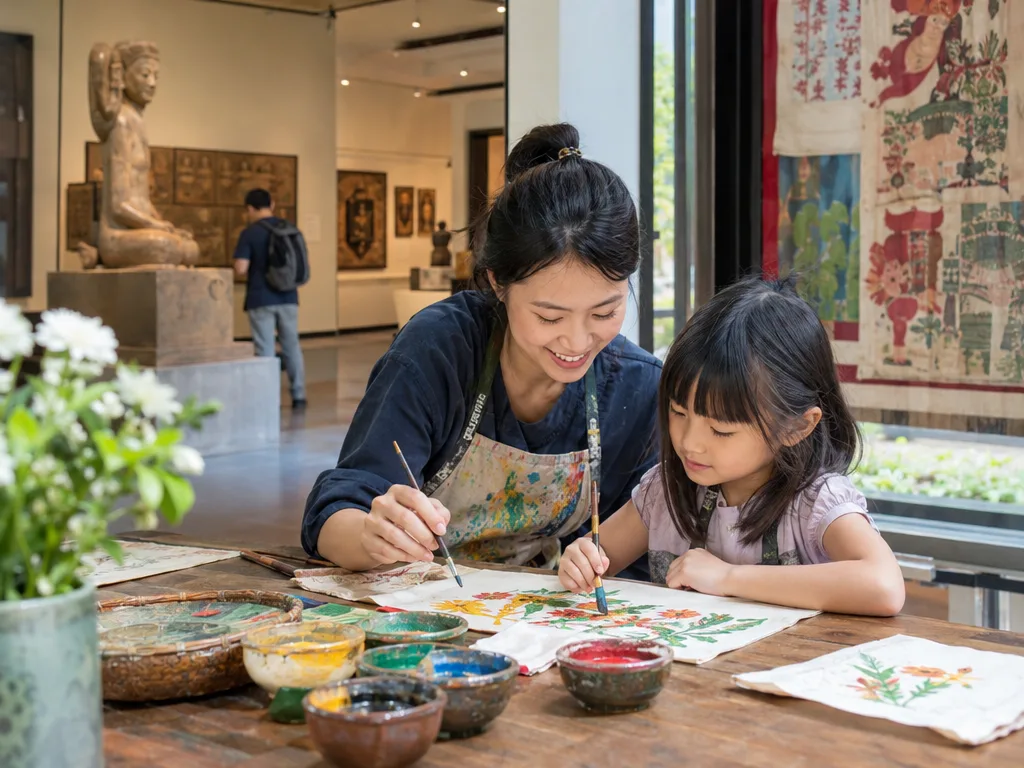
Hanoi’s creative life is easiest to enjoy when you treat it as a day of looking, making, and noticing rather than a race between famous addresses. A good hands-on art day can combine one substantial museum, one practical creative activity or demonstration, and a short walk that gives the city room to breathe. This approach works for first-time visitors, families, rainy-day planners, and anyone who wants more than a quick gallery photo.
Choose the kind of creative day you actually want
Start with your energy and curiosity, not with a long list of venues. If you want historical context, choose a museum with a substantial permanent collection. If you want to understand how objects are made, look for a craft village, demonstration, workshop, or education programme. If you prefer contemporary practice, choose a gallery or artist-led space where the exhibition itself is the main event. These are different experiences, and combining too many in one day usually leaves each one feeling rushed.
For a useful overview before you commit, read our broader guide to Hanoi’s art and creative spaces. It is useful for comparing museums, galleries, independent spaces, cafés, and workshops. This article narrows the choice to a practical, participatory day.
Begin with a museum that gives you context
A museum is a strong first stop because it gives the rest of the day a visual vocabulary. The Vietnam National Fine Arts Museum’s official visitor information places it at 66 Nguyen Thai Hoc in Ba Dinh and lists visiting from Tuesday to Sunday, 8:30 to 17:00. Its collection and display pages describe Vietnamese art across long historical periods and a range of media, while the museum also highlights a contemporary gallery with more than 60 works created from the 1980s onward.
You do not need to see everything. Choose one question before you enter: How do artists use lacquer, silk, ceramics, sculpture, or painting differently? Which images feel connected to everyday life? What changes when you move from older religious or courtly objects to modern and contemporary work? A single question turns a large collection into an active exercise instead of a parade of labels.
The museum also describes education as involving learning, interaction, experience, and creation. That is a useful reminder that art museums are not only places for quiet observation. Check the museum’s official site before visiting for current exhibitions, education programmes, access information, and any changes to visitor arrangements.
Add a culture-and-making stop
The most memorable creative experiences often happen when you can see a process, not only a finished object. Depending on the current programme, look for a guided demonstration, a short workshop, a craft-market conversation, or a place where makers explain materials and tools. The point is not to become skilled in one afternoon. The point is to understand how much patience, repetition, and local knowledge sit behind an object that might otherwise look simple.
For a museum-based option, the Vietnam Museum of Ethnology offers a useful bridge between cultural context and making. Its official site describes permanent and temporary displays, a virtual exhibition option, and education activities that include a children’s discovery room, multimedia spaces, film, family programmes, and performances. The site currently lists visiting information of 8:30 to 17:30, with Monday and Lunar New Year closure notes, an address on Nguyen Van Huyen, and an admission figure. Because schedules and fees can change, verify the current details directly before setting out.
When you visit a cultural museum, avoid treating craft as a decorative backdrop. Notice who made the object, what material or technique is involved, how it is used, and whether the display explains a community’s own traditions. Ask permission before photographing people, demonstrations, or work in progress. If a workshop is offered, follow the instructor’s pace rather than turning it into a rushed souvenir stop.
Build a simple route instead of stacking venues
A practical creative day needs breathing room. Plan one anchor museum, one secondary experience, and one flexible walk or café pause. Leave time for a slow lunch, a notebook break, or an unexpected exhibition. Hanoi’s streets can be stimulating and tiring at the same time, so a route that looks short on a map may feel longer in heat, rain, traffic, or crowded pedestrian areas.
- Morning: visit the anchor museum while your attention is fresh. Spend enough time with a few rooms rather than trying to cover every display.
- Midday: pause for food and water. Use the break to write down one artwork, material, or idea you want to investigate later.
- Afternoon: choose a hands-on, educational, or process-focused stop. If no suitable programme is running, visit a second museum section or a carefully selected gallery instead.
- Late afternoon: take a short walk, browse a bookshop or design-oriented shop, or sit somewhere calm and review what you saw.
For help shaping the walking portion, use our guide to Hanoi walking routes for curious travellers. Choose only the part that fits your energy and location; the walk should connect the creative stops, not compete with them.
Plan for rain, heat, and different access needs
Hanoi weather can change the feel of a creative itinerary, so make the indoor anchor the least negotiable part of the day. Carry water, keep a light layer available, and avoid promising a long outdoor transfer between appointments when the forecast is uncertain. A short walk can be replaced by a longer museum visit, a film or multimedia space, a bookshop, or a quiet café conversation.
Groups should also check practical access details before arriving. Ask the venue about stairs, lift access, seating, toilets, bag rules, photography, and the length of any workshop. Families may need a break before the final activity; older travellers may prefer fewer rooms and more time to sit. If a venue cannot answer a question clearly online, contact it directly rather than assuming the arrangement will suit everyone.
This kind of preparation does not make the day rigid. It creates options. Keep the anchor, secondary stop, and backup choice visible, then decide on the day which version feels comfortable.
Use a workshop as a learning experience
Before booking any workshop, ask what the session actually includes. Is it a demonstration, a guided activity, or independent studio time? Are materials supplied? Will the finished item be ready to take away, or does it need drying, firing, or later collection? Is the class designed for beginners, children, adults, or mixed groups? Clear answers help you avoid choosing an activity that does not match your available time.
Look for workshops that explain the process rather than promising instant mastery. A good session may leave you with an uneven first attempt, but it should also leave you understanding why the material behaves as it does. Clay, lacquer, paper, textile, print, and natural pigments each reward a different kind of attention. The creative value is in the exchange with the maker as much as in the object you produce.
Be cautious with programmes that make broad cultural claims without explaining their sources or community connections. Prefer hosts who can describe the technique, acknowledge local makers, and explain how participation supports the studio or neighbourhood. This is especially important when an activity uses heritage crafts as a tourist product.
Make the day work for families and mixed interests
Creative spaces can work well for families when the visit has a clear rhythm. Give children a small observation task: find three different materials, sketch one shape, or choose the artwork they would put in a room at home. Keep the first museum visit short enough to remain enjoyable, then balance it with movement, food, or a making activity.
For a mixed group, let each person choose one priority. One traveller may want historical paintings, another may prefer architecture, and someone else may be interested in ceramics or photography. A shared anchor plus individual choices is more realistic than expecting everyone to enjoy every room equally. Museums with educational, multimedia, family, or performance programmes can provide useful alternatives when attention spans differ.
Check the calendar before you leave
Creative programming changes more often than permanent displays. A gallery may close for installation, a workshop may require advance registration, or a museum may add a talk or performance on a particular day. Check official venue pages rather than relying on an old itinerary, social post, or review. If your dates are flexible, let the programme shape the route.
Before setting your date, browse the Local Events & Weekend Activities category for related planning ideas. Keep a backup option: a second museum, a neighbourhood walk, or a café where you can sketch and write. A flexible plan is especially valuable during rainy weather or around public holidays.
Creative-space etiquette that helps
- Read photography signs and ask before photographing people or active demonstrations.
- Keep voices low in galleries, but engage with educators and makers when conversation is invited.
- Do not touch artworks, tools, or materials unless staff say it is part of the experience.
- Allow working studios and small galleries room for their normal routines.
- Buy only what you genuinely value, and ask about care, transport, and later collection for fragile work.
- Use Vietnamese names and place terms carefully, and listen when staff explain a local context.
These habits make a visit more respectful and often lead to better conversations. Creative spaces are working environments, cultural institutions, or community projects—not simply backdrops for a travel checklist.
A flexible one-day outline
For a first version, begin at a museum with enough permanent material to hold your attention. After lunch, choose either a second museum with a different purpose or a confirmed workshop. Finish with a short walk and a quiet review of the day. If the weather is difficult, shorten the outdoor section and keep the route indoors. If a workshop is unavailable, replace it with a temporary exhibition, an education space, or a longer conversation with a gallery team.
The best Hanoi art day is not the one with the most stops. It is the one that helps you see how ideas, materials, histories, and people connect. Leave with a few specific memories: one technique you can describe, one artwork you want to revisit, and one question you did not expect to ask.
Keep exploring Hanoi’s creative side
For more ideas beyond one day, browse the Art & Creative Spaces category. Return to the official venue pages when you are ready to confirm current hours, exhibitions, programmes, and access details. With a little planning and plenty of room for discovery, Hanoi’s museums and creative spaces can become a conversation with the city rather than another item to tick off.
JOIN THE CONVERSATION
Comments (0)
No comments yet. Be the first to share a thought.