Hanoi’s creative life is easier to enjoy when you stop treating it as a checklist. The city has formal collections, experimental exhibition rooms, craft traditions, artist-led events, and ordinary streets where design and making remain part of daily life. A good Hanoi art itinerary leaves room for looking closely, taking a break, and changing direction when a small gallery or workshop catches your attention.
This guide is for travellers who want more than one famous museum. It explains how to combine the Vietnam National Fine Arts Museum with contemporary art, craft-focused experiences, and neighbourhood wandering. The aim is not to promise a fixed schedule—exhibitions and programmes change—but to give you a practical way to build an art day that feels connected to Hanoi.
Start with the kind of creative experience you want
Before choosing venues, decide what “art” means for your day. Hanoi can reward several different approaches, and mixing them works better than trying to see everything.
- Collections and history: choose a museum when you want context, materials, and a slower introduction to Vietnamese art.
- Contemporary conversation: look for a current exhibition, art talk, screening, or workshop rather than assuming every space has a permanent display.
- Making and craft: seek ceramics, lacquer, textiles, paper, or other hands-on traditions where the process matters as much as the finished object.
- Street-level observation: use a walk to notice shop signs, old façades, public murals, studios, cafés, and the way objects are repaired or repurposed.
That distinction also helps with expectations. A national collection is not the same as an independent gallery, and a craft village is not simply an outdoor museum. Each asks you to look differently.
Make the Vietnam National Fine Arts Museum your anchor
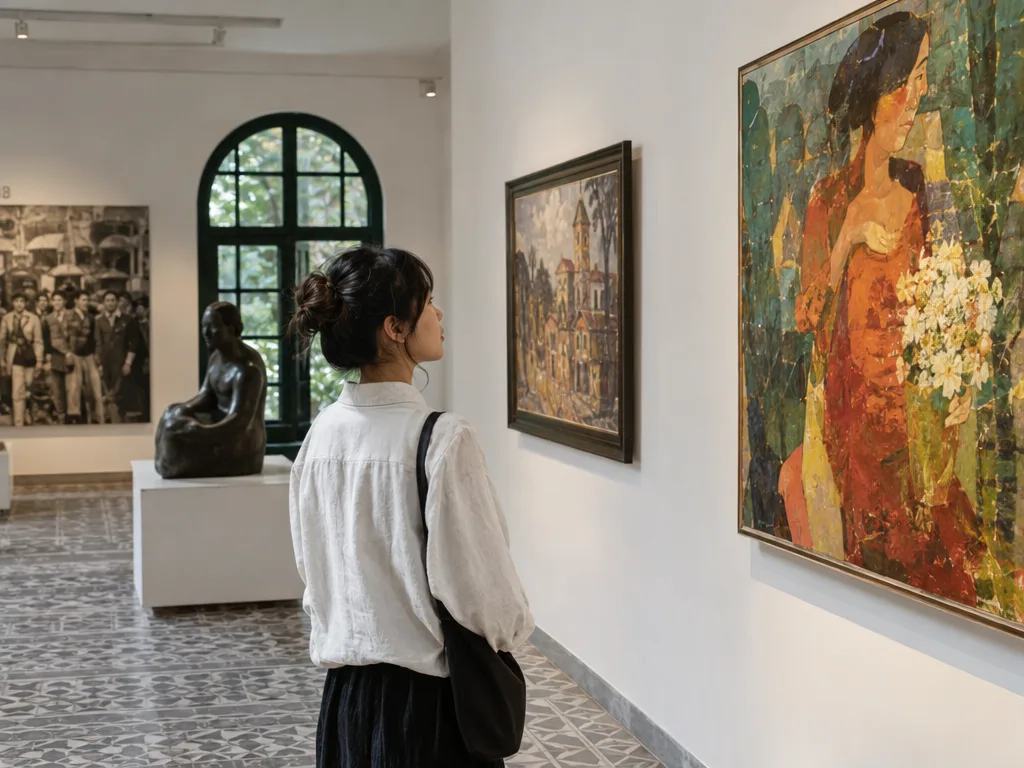
The Vietnam National Fine Arts Museum is a strong starting point because it gives a broad framework for Vietnamese visual culture. Its official site describes displays of approximately 2,000 special objects and artworks, while its collections cover around 20,000 objects and works across different media. The museum’s programme includes permanent displays, exhibitions, education activities, and digital resources, so it can support both a first visit and a return visit.
At the time of research, the museum’s visitor information listed 8:30–17:00 from Tuesday to Sunday and placed it at 66 Nguyễn Thái Học in Ba Đình. Check the official visitor page before setting out, especially around public holidays or special events. The museum’s own site is the best place to confirm current access details rather than relying on an old travel listing.
Allow enough time to move beyond the most recognisable images. Notice how materials change from room to room: lacquer, silk, ceramics, wood, paper, and oil paint each create a different relationship with colour and surface. If you are travelling with someone who is not confident with art museums, agree on a simple game: each person chooses one work for its material, one for its story, and one that they would not have expected to like.
For a broader introduction, pair this visit with our practical guide to art and creative spaces in Hanoi. Use it as background, then let your own observations decide what deserves more time.
How to look without rushing
Try three short passes through a room. First, walk through without reading every label. Second, return to the works that held your attention and read the available context. Third, choose one detail—a hand, border, texture, tool, or repeated motif—and look for it elsewhere. This keeps the visit active without turning it into an exam.
Add a contemporary-art stop, but check the programme first
Contemporary art in Hanoi is often programme-led. A venue may feel completely different from one month to the next because the exhibition, talk, education session, or installation has changed. That is part of the appeal, but it means a current official listing matters more than a generic “best galleries” article.
Vincom Center for Contemporary Art, or VCCA, is one useful example. Its official website identifies the centre at B1-R3, Royal City, 72A Nguyễn Trãi, Thanh Xuân, and publishes exhibition, event, and education listings. The site also shows that its programme can include exhibitions, art talks, tours, and workshops. Treat that variety as a planning clue: you may find a stronger experience by attending a conversation or guided activity than by dropping in between shopping errands.
When reviewing a contemporary programme, ask three practical questions:
- Is the current event an exhibition, talk, screening, workshop, or tour?
- Does it require registration or have a separate ticket arrangement?
- Will the venue’s location fit naturally with the rest of your day?
Do not build an itinerary around a remembered exhibition title. Save the official listing, check its date, and allow flexibility if the programme changes. For more ideas around timed cultural activities, browse the site’s Local Events & Weekend Activities category.
Include a craft experience, not just a gallery visit
Hanoi’s creative identity is also connected to making. Ceramics, lacquer, paper, woven materials, wood, metal, and food-related design all sit close to everyday life. A craft experience can make an art-focused trip feel more grounded because you see tools, hands, repetition, mistakes, and the practical decisions behind an object.
Bat Trang is the best-known craft destination in the wider Hanoi area for visitors interested in ceramics, but the useful question is not simply “Can I buy pottery?” It is “Can I understand how this place works?” Look for opportunities to see production, compare forms and glazes, and learn whether a workshop is genuinely hands-on or mainly a retail stop. If you make something, accept that the result may be uneven. The value is in understanding the process, not producing a perfect souvenir.
For a shorter city-based version, look for studios, seasonal workshops, and design-led events in central neighbourhoods. Availability changes, so use current venue pages or direct messages to confirm what is actually running. Avoid promising yourself a particular class until you have checked the date, language, duration, and whether finished pieces can be collected later.
Craft shopping also rewards patience. Compare an object’s weight, finish, edges, and usefulness rather than buying the first colourful item. Ask how it was made and whether the maker or studio can explain care and transport. A small, well-chosen piece is usually more memorable than a bag filled with generic souvenirs.
Turn the day into a walk between creative cues
An art itinerary does not need to move from door to door by taxi. Hanoi is visually rich between formal stops. Plan one museum or exhibition as your anchor, then use a walk to connect it with lunch, coffee, a bookshop, a market, or a quieter street.
Keep the walking section intentionally short. An estimated 30–60 minutes of unhurried wandering is enough to notice details without exhausting yourself in traffic and heat. Cross only where it feels safe, pause at the edge of busy streets, and avoid turning photography into a reason to block entrances or pavements.
Useful prompts for a creative walk include:
- Where do you see hand-painted lettering, repaired objects, or improvised displays?
- Which building details are repeated—tiles, shutters, balconies, vents, or metalwork?
- How do cafés and small shops use light, colour, plants, and old furniture?
- What changes when a commercial street becomes residential?
For a ready-made way to pace the walking portion, see the guide to Hanoi walking routes for curious travellers. You can borrow its slower mindset without treating the route as a strict tour.
Choose a realistic one-day structure
The most comfortable plan is usually two substantial creative stops plus one flexible element. Three museums in a row can blur together, while one museum followed by a contemporary event and a craft-related neighbourhood gives the day more texture.
A balanced art day
- Morning: begin at the Vietnam National Fine Arts Museum while your attention is fresh. Focus on a few rooms and works rather than trying to memorise the whole collection.
- Midday: take a proper break. Discuss what you saw, eat somewhere convenient, and avoid scheduling the next stop so tightly that a delayed meal becomes stressful.
- Afternoon: visit a current contemporary exhibition or attend a listed art activity. Confirm the programme before leaving your hotel.
- Late afternoon: choose either a craft-focused stop or a neighbourhood walk. If the weather is difficult, keep this part indoors and flexible.
- Evening: write down the names of artists, materials, or places you want to investigate later rather than adding another destination.
If you only have half a day, choose either historical collections or a current contemporary programme, then add a short walk. A focused half-day often feels richer than a rushed full-day circuit.
Know what to check before you leave
Creative venues are more sensitive to changes than major landmarks. Check the official website or social channels for the current exhibition title, admission arrangement, registration requirements, photography rules, and any temporary closure. This is especially important for workshops and talks, where the event itself may be the main reason to travel across the city.
Wear comfortable clothes and bring a small amount of patience. Some galleries are quiet and cool; craft areas can be busy, dusty, or more practical than polished. Carry a notebook if you like recording names and materials, but do not assume every venue allows close photography. Ask before photographing people, makers, students, or works with specific restrictions.
Transport is part of the plan. Use a map to check the real sequence of stops on the day, not just the straight-line distance. Hanoi traffic, rain, heat, and event crowds can make a short journey take longer than expected. Keep one stop optional so the itinerary can absorb reality.
Link the art day to the rest of Hanoi
An art-focused visit becomes more meaningful when it connects with ordinary city life. After a museum, you might notice how colour and typography work in a local market. After a craft experience, you may look differently at bowls, tiles, lamps, or shop displays in a neighbourhood café. This is why creative travel does not have to stay inside gallery walls.
If you want to continue with a broader city perspective, combine the route with our one-day local approach to Hanoi, adapting it around the venues you have confirmed. You can also browse the Hanoi Walking Routes category for ideas on slowing down between appointments.
The result should feel less like collecting attractions and more like learning how the city sees, makes, preserves, and reuses things.
Final tips for a better creative visit
- Check official venue information on the day or the evening before.
- Choose one theme—materials, colour, craft, architecture, or contemporary debate—to carry between stops.
- Leave space for a café, meal, or quiet street; reflection is part of the experience.
- Ask before taking close-up photographs or photographing people at work.
- Buy fewer objects, but learn who made them and how to care for them.
- Treat a changing programme as normal, not as a failure of planning.
Hanoi’s art and creative spaces are most rewarding when you let the day move between concentration and curiosity. Start with a reliable collection, add one current programme or craft encounter, and use the streets to connect what you saw with the city around it. That is enough for a memorable art day—and a good reason to return for a different exhibition or neighbourhood.
JOIN THE CONVERSATION
Comments (0)
No comments yet. Be the first to share a thought.